Somewhere between waking and sleeping lies a state of conscious rest that ancient yogis have practiced for centuries. Yoga nidra, often called “yogic sleep,” invites practitioners into this liminal space through guided meditation. Unlike active yoga styles that build strength through movement, this practice unfolds while lying completely still in shavasana or corpse pose. The result feels almost paradoxical, offering deep relaxation paired with heightened inner clarity.
Key Takeaways
- Yoga nidra is a guided meditation practice performed lying down that induces deep rest while maintaining subtle awareness
- Research shows yoga nidra for sleep can increase deep sleep stages, improve sleep efficiency, and reduce time to fall asleep
- The practice produces measurable physiological changes including altered brain chemistry, reduced cortisol, and balanced hormones
- Yoga nidra meditation requires no prior experience, physical ability, or special equipment
- Regular practice may reduce mild anxiety and depression while improving cognitive function and memory
- Sessions typically last 20 to 60 minutes, though even brief daily practice produces cumulative yoga nidra benefits
The Roots and Rising Popularity of This Practice
The term yoga nidra comes from Sanskrit, where “yoga” means union and “nidra” means sleep. References to this state appear in ancient texts like the Upanishads and Mahabharata, describing a meditative state connected to the higher reaches of consciousness. These practices remained within traditional lineages until teachers like Satyananda Saraswati and Swami Rama began sharing systematic approaches with Western audiences during the mid-twentieth century.
They blended traditional tantric techniques with structured relaxation methods, making the practice accessible to anyone willing to lie down and listen. Since then, yoga nidra has spread into wellness centers, therapy offices, and military programs designed to help veterans manage stress. Most people who discover this practice arrive exhausted, struggling with racing minds that refuse to quiet. Yoga nidra meets them exactly where they are, requiring nothing more than the ability to lie still and follow simple instructions.
How Yoga Nidra Differs from Sleep and Ordinary Relaxation
During ordinary sleep, consciousness fades entirely as we cycle through REM and non-REM stages without awareness of time or surroundings. Yoga nidra works differently because it maintains a thread of awareness throughout the practice. Practitioners appear to be sleeping, but their consciousness operates at a higher degree of awareness, creating what researchers call a “hypnagogic state.” This is that drowsy threshold just before sleep descends, where the body has released tension but the mind remains quietly alert.
Scientific research confirms that yoga nidra can reliably trigger this hypnagogic state, with brain waves slowing significantly while awareness persists. This combination produces benefits that neither ordinary sleep nor simple relaxation can match. Standard relaxation techniques certainly reduce stress, but they lack the systematic guidance that makes yoga nidra meditation distinct. The structured progression through body awareness, breath, and visualization creates measurable shifts in brain chemistry and nervous system function.
Core Components of the Practice
A typical yoga nidra session lasts from twenty minutes to an hour, moving through several distinct stages that each serve a specific purpose. The practice begins with initial settling, where attention turns inward and the body finds its comfortable position.
Body rotation follows, with awareness moving systematically through different body parts. Right hand, left hand, face, torso, legs. This deliberate movement of attention activates the sensorimotor cortex and progressively releases muscular holding patterns. The practice then shifts to breath awareness, where relaxation deepens without any effort to control the breathing. Simply observing the natural rhythm calms the nervous system and prepares the mind for subtler experiences.
From here, the guide introduces pairs of opposites like heaviness and lightness or warmth and coolness, expanding the mind’s capacity to hold contrasting experiences. Visualization comes next, offering images like a tranquil forest or meaningful symbols that engage deeper layers of consciousness. Finally, the return phase gradually brings awareness back to the room and ordinary waking life, often repeating the sankalpa while the mind remains receptive.
Science-Backed Yoga Nidra Benefits
Research continues to reveal measurable effects of regular yoga nidra practice, moving this ancient technique into evidence-based wellness. Clinical studies have shown that yoga nidra meditation produces positive physiological changes, including improvements in hematological variables, red blood cell counts, blood glucose levels, and hormonal status. These findings suggest the practice affects the body at a cellular level, not just in subjective feelings of relaxation.
Brain imaging research adds another layer of evidence. Two neuroimaging studies demonstrated that yoga nidra produces changes in endogenous dopamine release and cerebral blood flow, confirming that its effects on the central nervous system are objectively measurable. Mental health markers shift as well, with research showing reductions in mild depression and anxiety across multiple populations including college professors, students, and trauma survivors. For women specifically, yoga nidra benefits may extend to menstrual symptoms, with research documenting reductions in prolactin, thyroid-stimulating hormone, and follicle-stimulating hormone.
Yoga Nidra for Sleep and What Research Shows
Sleep difficulties affect millions of people who find that standard treatments provide incomplete relief. A growing body of evidence suggests that yoga nidra for sleep may offer meaningful support by addressing the root causes of sleep disruption rather than simply sedating the mind.
A two-week yoga nidra course involving healthy young men demonstrated this effect clearly, enhancing both the quality and duration of deep sleep. This slow-wave or delta sleep directly influences attention, learning, and memory consolidation. Participants exhibited increased sleep efficiency and higher delta wave percentages, and researchers noted faster cognitive responses with no loss in accuracy.
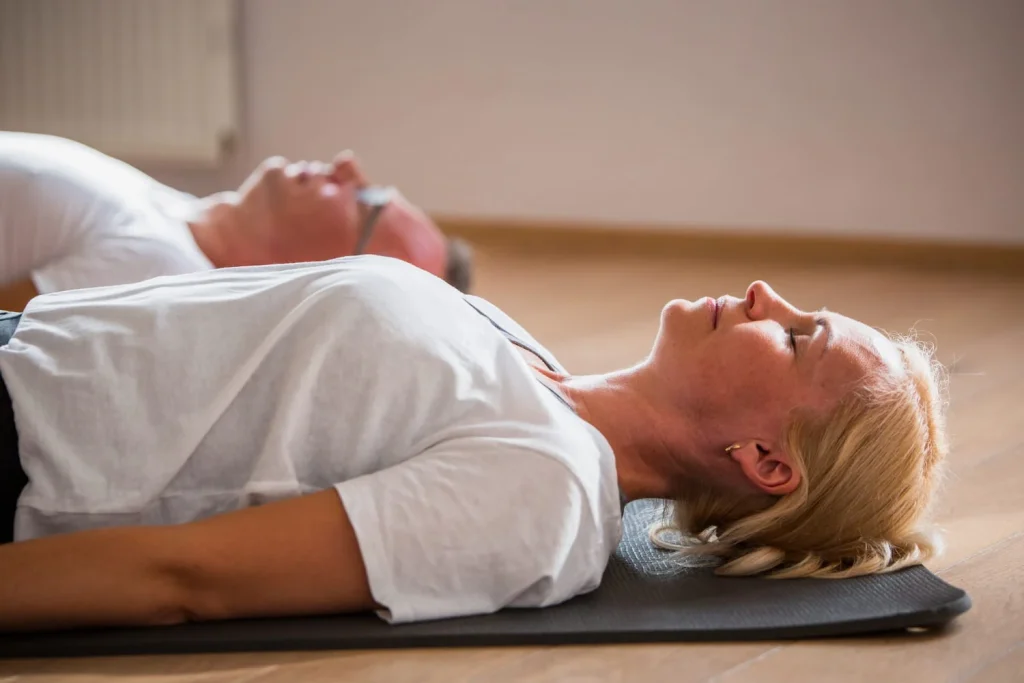
For those with chronic insomnia, results are equally encouraging. A randomized controlled trial found that both cognitive behavioral therapy and yoga nidra improved total sleep time, sleep efficiency, and wake after sleep onset. The yoga nidra group showed marked improvement in deeper sleep stages, and their salivary cortisol levels dropped after practice. Researchers believe yoga nidra works by reducing sympathetic nervous system activity, which drives the fight-or-flight response, while increasing parasympathetic activity that calms the body and allows natural sleep to occur.
Practicing Yoga Nidra and Getting Started
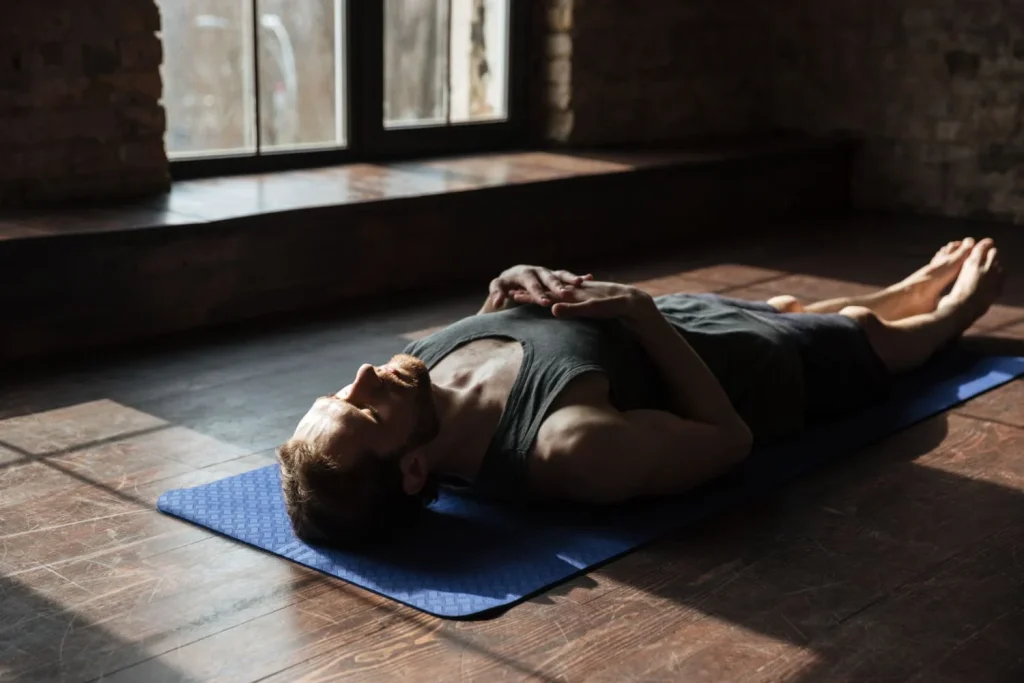
Beginning a yoga nidra practice requires almost nothing. You need only a quiet space, a mat or comfortable surface, and perhaps a blanket for warmth. Lie flat on your back with arms slightly away from the body, palms facing upward, and follow along with a recorded or live guide.
Finding guidance is easy because recorded sessions are available through free apps and streaming services. Beginners often do well with recordings between fifteen and thirty minutes. Practice when you feel tired but not so exhausted that you will immediately fall asleep, unless improving sleep is your primary goal. Wear comfortable clothing, keep the room slightly cool, and let go of any expectation about what “should” happen.
Consistency matters more than duration when building a yoga nidra practice. Short daily sessions produce greater cumulative yoga nidra benefits than occasional longer sessions spaced far apart.
Discovering Deeper Stillness in Nature
Mountains have a way of amplifying inner quiet, and the Blue Ridge Mountains of North Carolina offer exactly the kind of environment where practices like yoga nidra flourish. Streams, waterfalls, and forests create a natural soundscape that replaces urban noise with flowing water and birdsong.
At Wheel of Bliss, a spiritually-centered sanctuary set on 63 acres surrounded by hundreds of acres of National Forest near Hot Springs, seekers find space for contemplative practices to unfold without distraction. The Celestial Center yurt provides an ideal setting for guided yoga nidra sessions, while the Sacred Mountain Sanctuary offers secluded spots for silent walks and personal contemplation. Originally rooted in Tibetan Buddhist tradition, the center now welcomes practitioners from all spiritual paths who value healing, restoration, and nature communion. Joining a guided retreat here combines skilled instruction with pristine surroundings that accelerate inner work.
The Gift of Doing Nothing Well
Perhaps the most radical aspect of yoga nidra is its invitation to stop striving. In a culture that celebrates productivity and constant motion, lying still and allowing rest to happen becomes countercultural. This practice reveals that restoration is not earned through effort but received through surrender.
FAQ
Can yoga nidra help with insomnia?
Research suggests it provides meaningful support for sleep difficulties. Studies show improvements in sleep efficiency, time to fall asleep, and deep sleep quality. Yoga nidra for sleep calms the nervous system and reduces mental agitation that prevents natural sleep.
How long should a yoga nidra session last?
Sessions typically range from twenty minutes to one hour. Beginners often start with fifteen to twenty minute recordings. Brief sessions produce benefits when practiced regularly, so consistency matters more than duration.
Is yoga nidra the same as sleeping?
No. While the body reaches rest states comparable to sleep, the mind maintains awareness. The goal is profound relaxation while remaining aware of your surroundings, which differs from ordinary sleep where consciousness fades entirely.
Do I need yoga experience to practice yoga nidra meditation?
None at all. The practice requires only lying down, remaining still, and following the guide's instructions. Physical limitations rarely present barriers since there are no poses, making yoga nidra meditation accessible to everyone.