The Blue Ridge Parkway winds through countless overlooks and trailheads, but few capture the raw beauty of the southern Appalachians quite like Craggy Gardens. Perched at elevations exceeding 5,600 feet, this high-altitude destination rewards hikers with sweeping mountain vistas, tunnels of twisted rhododendron, and meadows that seem to float above the clouds. For those seeking a memorable outdoor escape near Asheville, the Craggy Gardens Trail delivers an experience that lingers long after you’ve returned to lower ground.
Key Takeaways
- The Craggy Gardens Trail round trip distance spans approximately 1.9 to 2.1 miles, depending on your starting point and how many spur trails you explore
- Elevation at the gardens reaches 5,680 feet, making temperatures 10 to 20 degrees cooler than Asheville
- Catawba rhododendron explodes into pink and purple blooms from early to mid-June
- The picnic area provides tables, charcoal grills, potable water, and restroom facilities for a full-day outing
- Two distinct trailheads offer different hiking experiences, with one steeper and one more gradual
Route Details and What to Expect
This hiking route connects two access points along the Blue Ridge Parkway, and your choice of starting point shapes the entire experience. Beginning from the Visitor Center puts you on a self-guiding nature path that climbs through gnarled forests of mountain ash, yellow birch, and American beech. Moss blankets the rocky terrain here, and rhododendron branches arch overhead to create corridors that feel otherworldly. This gentler approach leads to the historic trail shelter atop Craggy Flats, where Civilian Conservation Corps workers built a log structure back in 1935.
The alternative approach begins at the Craggy Gardens picnic area and offers a more athletic challenge. This steeper route rewards your effort with quick forest immersion before emerging at that same historic shelter. Many hikers prefer starting here because the workout comes first, leaving the easier descent for tired legs.
| Trailhead | Milepost | Distance to Summit | Elevation Gain | Difficulty |
| Visitor Center | 364.4 | 0.3 miles | 200 ft | Easier |
| Picnic Area | 367.6 | 0.8 miles | 450 ft | Moderate |
The Craggy Gardens Trail round trip distance from either trailhead tops out around two miles when you include the meadow spur trails. Expect moderate challenges like exposed roots, wet rocks, and occasional log steps, but nothing requiring special skills.
Seasonal Beauty and Best Times to Visit

Craggy Gardens Asheville locals consider this their go-to summer escape, and the reason becomes obvious the moment you step out of your car into temperatures fifteen degrees cooler than the valley below. That 5,600-foot elevation keeps the ridgeline comfortable even when the city swelters. Still, weather shifts fast at altitude so a light jacket belongs in your pack.
June brings the most visitors because that’s when Catawba rhododendron blankets these slopes in rolling waves of pink and purple blossoms. The display ranks among the most spectacular wildflower events in the entire Appalachian region.
As summer deepens into July and August, blueberry season takes center stage. Wild bushes dot sunny patches throughout Craggy Flats, and hikers who time their visit right can snack their way across the bald while wildflowers carpet the meadows with violets and mayapple.
Fall delivers a different kind of magic altogether. Surrounding hardwoods turn gold, crimson, and orange while mountain ash produces brilliant red berry clusters. Fewer visitors mean quieter trails, and early October typically offers peak foliage.
Winter remains unpredictable since the Blue Ridge Parkway closes sections frequently between November and March. When the road stays open, ice encases rhododendron branches into crystalline sculptures against gray skies.
Facilities at the Picnic Area
The Craggy Gardens picnic area sprawls across a hilly mountaintop site where mature buckeye, birch, and mountain ash trees provide natural shade. Dozens of tables scatter throughout in settings ranging from cool forest canopy to sunny clearings with open views, letting you pick the perfect spot.
Once you’ve claimed your table, charcoal grills stand ready nearby for cooking lunch with a view. These are shared facilities, so pack your own briquettes and cooking supplies. When you need to refill water bottles or use the restroom, a modern building with flush toilets and wheelchair accessibility sits near the parking entrance.
One quirk worth noting is that the steep hillsides mean some tables have benches on only one side. Experienced visitors suggest bringing camp chairs for larger groups, and arriving early on summer weekends helps secure the best spots.
After your meal, the trailhead waits at the parking area’s far corner up a short set of steps. About two-tenths of a mile in, a spur leads to a wooden gazebo with stunning panoramas. This natural rhythm of picnic, hike, and return makes for a perfect day.
Preparing for Your Hike
Planning starts before you leave home with a quick check of current Blue Ridge Parkway conditions online. Road closures happen regularly due to weather or construction, and discovering a closed gate after an hour-long drive makes for a frustrating morning. The Visitor Center operates seasonally from May through October.
Once you’ve confirmed the road is open, pack these items for a comfortable hike.
- Water bottle and high-energy snacks for altitude exertion
- Sunscreen, lip balm, and a brimmed hat for UV protection
- Light jacket or layers for temperature drops
- Sturdy hiking shoes with reliable traction
- Downloaded trail map since cell service is unreliable
- Camera for capturing rhododendron blooms and mountain views
Among these items, footwear deserves special attention. Rocky sections, exposed roots, and damp morning fog all demand shoes with good traction. Trail runners work for experienced hikers, but everyone else should consider light hiking boots.
If you’re bringing a dog, they can join you on leash as long as they’re comfortable scrambling over occasional obstacles. Pack extra water for your companion since the grassy balds offer little shade during summer.
Nearby Trails Worth Exploring
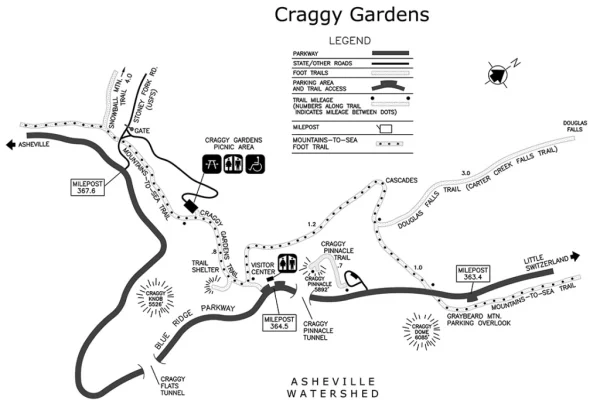
Once you’ve conquered the main trail and hunger for more, Craggy Pinnacle Trail waits just down the road at Milepost 364.1. This 1.4-mile round trip climbs to a 5,892-foot summit where 360-degree views rival anything in Western North Carolina. Sunsets from the top draw photographers willing to time their descent carefully in fading light, making it worth the extra effort if you arrive early enough in the day.
Beyond these shorter options, the Mountains-to-Sea Trail intersects here and opens possibilities for multi-day backpacking along its 1,175-mile route from the mountains to the coast. For those wanting a challenging single-day addition instead, Douglas Falls Trail descends 3.5 miles to a spectacular 70-foot cascade that makes the steep return climb worthwhile.
Extending Your Mountain Experience
After hiking the ridgeline trails, many visitors find themselves craving deeper immersion in the Blue Ridge Mountains. Something awakens within us out here, and that pull toward stillness grows stronger with every summit view.
Wheel of Bliss offers exactly this kind of sanctuary experience. Located about 30 minutes from Hot Springs on 63 acres surrounded by National Forest, this retreat center welcomes those seeking meditation, spiritual renewal, and authentic nature connection. The Celestial Center yurt hosts meditation sessions that deepen the peace you discovered on mountain trails, while private and group accommodations let you extend your visit from a single day into a multi-day restoration.
Practicing mindfulness at the summit or sitting in silent meditation at a dedicated retreat space both tap into the same truth. The Blue Ridge Mountains hold space for genuine inner renewal.
Finding Stillness Among the Peaks
High-altitude meadows stretching toward distant horizons remind us how small our daily concerns really are. This trail delivers that perspective within a manageable hiking distance, making Craggy Gardens accessible to nearly anyone willing to lace up and climb. Each season reveals different characters across these ancient balds, and each visit plants seeds of appreciation that grow long after you’ve descended.
FAQ
When do rhododendrons bloom at Craggy Gardens?
Peak bloom typically occurs from early to mid-June, though timing varies slightly each year depending on spring weather patterns. Mountain laurel follows about two weeks later.
Is this trail suitable for beginners?
Yes, with preparation. The moderate difficulty rating means comfortable fitness levels handle it well. Sturdy shoes and steady pacing help newcomers enjoy the experience without strain.
Can I bring my dog on the trail?
Leashed dogs are welcome on all Craggy Gardens Asheville area trails. Bring water and watch for signs of overheating during summer visits.
What facilities are available at the picnic area?
The picnic grounds provide tables, shared charcoal grills, wheelchair-accessible restrooms with flush toilets, potable drinking water, and trash dumpsters. No food vendors operate onsite so pack everything you need.