Hatha yoga is more than a series of postures. These are ancient practices that were made to help balance the mind and body. Its roots are over a thousand years old and deeply embedded in Indian traditions, looking for a pathway for spiritual enlightenment. The history of Hatha yoga is connected with the sage Goraksha, who is a disciple of Matsyendranath. He is believed to have systemized his techniques in the medieval period. It evolved over time from monastery rituals into conventional methods addressing physical strength, calm, and mental clarity.
In our fast-paced modern society, this practice offers more than just fluid bodily movements. It provides a methodical approach to reduce anxiety, sharpen concentration, and restore energy. The discipline of Hatha helps to close the distance between meditation and physical activity. This lets the practitioner test the body’s boundaries and helps the mind to settle its fluctuations.
Understanding the Symbolism of “Ha” and “Tha”
The meaning of Hatha yoga is profound. It’s a compound word formed from the two syllables of Sanskrit. “Ha” refers to the sun bringing out active energy, warmth, and outward characterization. “Tha” symbolizes the moon and represents coolness, stillness, and self-observation.
They show how opposites fit together: effort and relaxation, action and giving up, masculine and feminine. This balance represents what is Hatha yoga. Helping the practitioner bring these two forces within themself into balance. The specific exercises (asanas), breathing exercises (pranayama), and meditation practices integrate the mind and the body, enabling the practitioner to achieve a higher state of awareness.
The Main Components of Hatha Yoga
Hatha Yoga is much more than merely a combination of physical exercises. It is a combined movement, breathing, and focused intention system. Gaining more physical health, energy preservation, and inner awareness depends on every component that forms Hatha Yoga. From yoga asanas definition to the more subdued techniques of breath control and symbolic gestures, each element adds to the great metamorphosis this discipline presents.
Asanas: The Foundation of Physical and Mental Balance
Asanas, which means Postures, are at the core of Hatha Yoga. These positions are intended to enhance strength, flexibility, and endurance. Yoga differs from modern-day exercise routines, which are purely fitness-based. These postures serve as tools for body alignment, energy pathway cleansing, and mental preparation through deep relaxation. Here are some of the common asanas:
- Tadasana (Mountain Pose): Improves awareness and helps muscles become more stable.
- Adho Mukha Svanasana (Downward Dog): In addition to stretching the spine, this exercise enhances circulation.
- Bhujangasana (Cobra Pose): Chest opener. Strengthens the spine and improves respiratory function.
- Savasana (Corpse Pose): Deep relaxation and stress release.
Every one of these positions influences internal organs, circulation, neurological system, and muscles as well. By holding and transitioning between asanas mindfully, practitioners experience a deep yoga definition and benefits – from enhanced flexibility to mental clarity.
Pranayama: Harnessing Energy Through Breath
In Hatha Yoga, breath is defined as life, but it also defines a point of control for the energies of life within the practitioner. Moreover, Pranayama is defined as the regulation of the breath for the purposes of controlling the mental stratosphere, enhancement of lung capacity, and regulation of the vital force of the body (prana). Below are some commonly utilized forms of pranayama:
- Nadi Shodhana (Alternate Nostril Breathing): Relaxes the mind by removing energy constrictions.
- Kapalabhati (Skull Shining Breath): Detoxifies the body and improves energy circulation.
- Bhramari (Bee Breath): Lowers anxiety levels and assists in better focus.
Mudras and Mantras: The Strength of Gesture and Sound
In addition to physical movements, Hatha Yoga includes mudras (hand movements) and mantras (spiritual sounds), which help direct attention and energy.
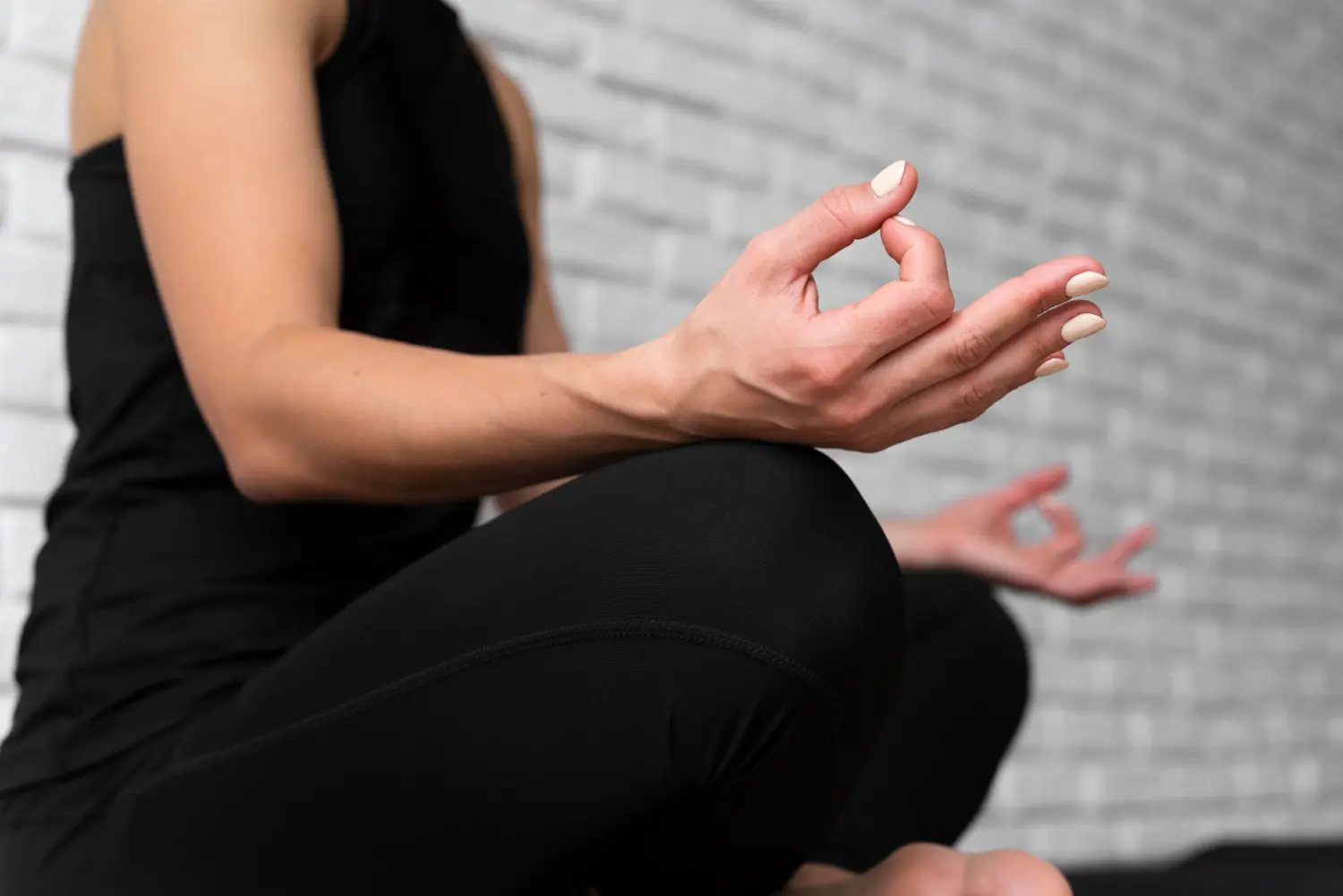
Within the body, Mudras focus energy towards a particular intention. For example, Gyan Mudra (where the thumb and index finger touch) improves one’s focus. Another example is Anjali Mudra, where the palms are joined together to express balance and gratitude. Mantras are the chanting of sacred sounds such as “Om,” which helps induce meditation and sharpen concentration.
These components help enhance the practice so that body, breath, and mind can work together in unison. Whether through the focus of the practitioner on a yoga asanas definition, the sound of breathing, or the movement as well as the meaning of the gestures, Hatha Yoga changes the outside and the inside.
Benefits of Hatha Yoga
Hatha Yoga is not just a practice; it’s a technique of the body with the aim of calming down the mind and restoring balance. Movement, breath, and focused awareness bring a wide range of benefits beyond the mat. It brings emotional awareness and builds physical endurance.
Aspects of Health: Strength, Flexibility, Endurance
By engaging the body in a controlled yet fluid manner, Hatha Yoga means creating a foundation of physical resilience that supports both movement and stillness. From a physical perspective, consistent practice improves muscle strength and increases range of movement. With more practice, you will notice increased stamina during the practice and in daily tasks. All stretching and muscle engagement are created in a way that is safe and complements any exercise program or can be effective on its own.
Mental Well-Being: Stress Relief and Focus
Beyond the benefits achieved physically, this style of yoga has greatly enhanced the well-being of the practitioners. Its careful attention to the slower elements reduces stress by stimulating the parasympathetic nervous system – your inner relaxation response. They also benefit from a higher focus ability, which extends beyond the mat and results in higher productivity and better mental clarity during the day. The practice also promotes the balance of emotions so that one can cope with challenges more effectively.
Energy Balance: Restoring Vitality
Hatha Yoga aims to bring harmony to the body’s energy and equilibrium to activity and relaxation. Pranayama practices increase the flow of oxygen, which improves energy levels and mental alertness. Mantras alongside mudras increase attention and harness energy, aiding in general awareness and health. Adopting a routine practice of yoga helps maintain energy flow to the body and mind.
Hatha Yoga as a Preparation for Meditation
Physical practice and meditation are very much related to one another. To achieve a deep meditative state, the body should be both relaxed and stationery, and this is where meditation asanas are applicable. The body is prepared to sit still without discomfort by stretching, strengthening, and releasing the tension. At the same time, the nervous system is calmed by breathing in slowly, which helps focus on the inward. The essence of movement plus the essence of stillness serves as the perfect base for meditation.
Practical Tips for Integrating Meditation
These tips can help you to go naturally from asana practice into meditation:
- End with Stillness: Spend at least a few minutes in Savasana (Corpse Pose). This allows the mind and body to come to rest after completing postures.
- Breath as a Bridge: Before meditation, shift your breathwork from Ujjayi or Nadi Shodhana to gently and effortlessly breathing.
- Find a Comfortable Posture: Sit in mulabandha (root lock) or use cushions to create an easy and stable position.
- Set an Intention: Gently close your eyes while focusing on a simple intention or a mantra that will aid in your meditation.
Start Small: Instead of aiming for too much too soon, begin with just 5-10 minutes of calm rest and increase this duration over time.
Tips for Beginners
Learning yoga can be daunting, however, it helps to start from somewhere. You can start by looking for different types of Hatha yoga practices because some are focused on movement while others emphasize strength. In case you want some guidance, working with an instructor will give you insights about alignment, breathing, and injury prevention. Taking a retreat will deepen the experience further since you can do this in a tranquil setting as well. For further assistance, you can register for the retreat.
Safety Recommendations
Newbies often try to outdo themselves. It leads to strain and discomfort, so to do it safely, you should:
- Pay Attention to Your Body: Never try to put yourself in a stretch that does not feel comfortable. Always ease into poses gradually.
- Breathe: Tension is not needed during stretches, so focus on breathing instead.
- Assist Yourself with Some Add-On Equipment: Blocks, straps, and even cushions can help maintain proper alignment.
- Stretch Out First: Gentle stretches get the muscles and joints ready for deeper postures.
- Rest Whenever It Is Required: Breaks are incredibly important when one is looking to increase their strength and flexibility.
If you want a full rejuvenation of your soul and body, you would require a supportive environment to practice in. For ideal surroundings, explore accommodations at Bliss Retreat House, where you can fully immerse yourself in the practice.
For individuals who wish to enhance their knowledge through books, online courses, and video classes, there are plenty of tools at hand. Investigating other materials can support your work and offer insightful direction.
A Path to Balance and Well-Being
Keep in mind that this practice encompasses much more than physical positions. It is a comprehensive scheme for balancing your body, mind, and vital energy. Once practice is routinely done, it becomes a life-altering experience rather than just an exercise.
The ultimate gift of this ancient discipline is the state of cultivating profound inner balance. Practitioners of this discipline achieve centered presence by working on breath, movement, and attention simultaneously, allowing one to remain steady in life’s omnipresent challenges.
This time-honored system is cognizant of participants searching for better physical health, mental clarity, and even spiritual development, offering the most comprehensive system in aiding one’s journey to wholeness.