Hand gestures hold ancient power in meditation traditions worldwide. The dhyana mudra stands among the most sacred and widely practiced of these timeless seals. Buddha sat with this gesture beneath the Bodhi tree. Countless yogis have discovered peace through its simple positioning. Whether you’re starting your meditation path or deepening existing practice, this powerful mudra opens doors to stillness and inner awakening.
The Ancient Wisdom of Dhyana Mudra Meaning
The dhyana mudra meaning comes from the Sanskrit word “dhyana,” translating directly to meditation. This gesture represents much more than hand positioning – it captures the essence of concentrated awareness that leads to enlightenment.
Maharshi Patanjali described dhyana in his Yoga Sutras as uninterrupted consciousness flowing toward a single object. This creates sustained concentration without mental wandering. As the seventh limb of yoga, dhyana follows dharana (concentration) and leads to samadhi (blissful absorption). The dhyana mudra serves as a bridge between focused attention and transcendent states.
Ancient yogis practiced this gesture long before Buddhism emerged. Its roots stretch deep into pre-Buddhist India, where spiritual seekers discovered its power to channel life force energy and calm restless minds. This explains why the gesture appears across wisdom traditions, crossing religious boundaries while keeping its core purpose intact.
The mudra evolved through various meditation schools over millennia. Each preserved its structure while adding cultural interpretations. From Himalayan caves to monastery halls, this hand position has supported countless practitioners seeking inner realization. The dhyana mudra meaning carries forward thousands of years of accumulated wisdom about reaching meditative states.
Sacred Symbolism Across Cultures
The hands form a triangle that holds deep meaning across Buddhist and Hindu traditions. This sacred shape represents the Triratna – Buddhism’s Three Jewels:
- Buddha (enlightenment)
- Dharma (teachings)
- Sangha (spiritual community)
The triangle also symbolizes spiritual fire that burns away mental impurities and distractions. Different regions interpret this symbolism uniquely. Theravada Buddhism, particularly in Southeast Asia, often places thumbs against palms rather than touching tips together. This variation reflects local adaptations while preserving the mudra’s essence. Mahayana traditions typically emphasize touching thumbs, creating the complete triangular seal.
The right-hand-over-left positioning carries profound meaning. The right represents enlightenment, wisdom, and higher consciousness. The left symbolizes maya (illusion) and everyday concerns. This arrangement suggests spiritual realization rises above worldly distractions, with wisdom naturally transcending material preoccupations.
Art historians trace the mudra’s evolution through cultural expressions:
- Gandharan sculptures from ancient Pakistan show early Buddhist interpretations
- Chinese Wei dynasty representations introduce subtle modifications
- Thai and Laotian depictions maintain distinct characteristics
- Modern temple art continues these traditions while adapting to contemporary aesthetics
The bowl-like formation creates another powerful symbol – receptivity to divine grace and universal truth. This openness represents the meditative mind’s capacity to receive insights, wisdom, and peace. Empty yet receptive, the hands mirror the ideal mental state: clear awareness without grasping.
How to Do Dhyana Mudra: Complete Practice Guide
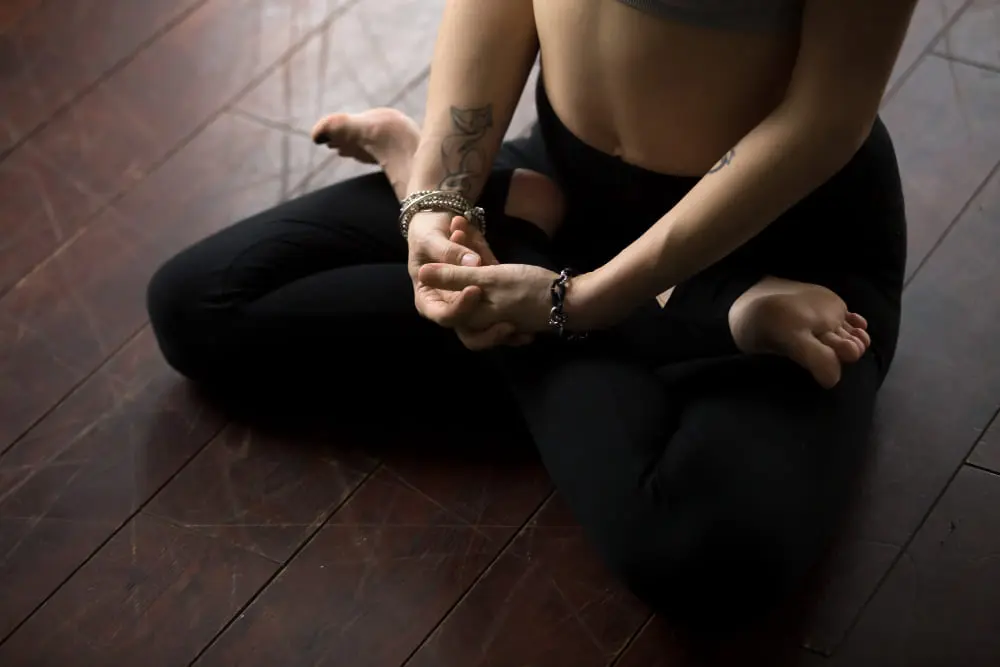
Foundational Positioning
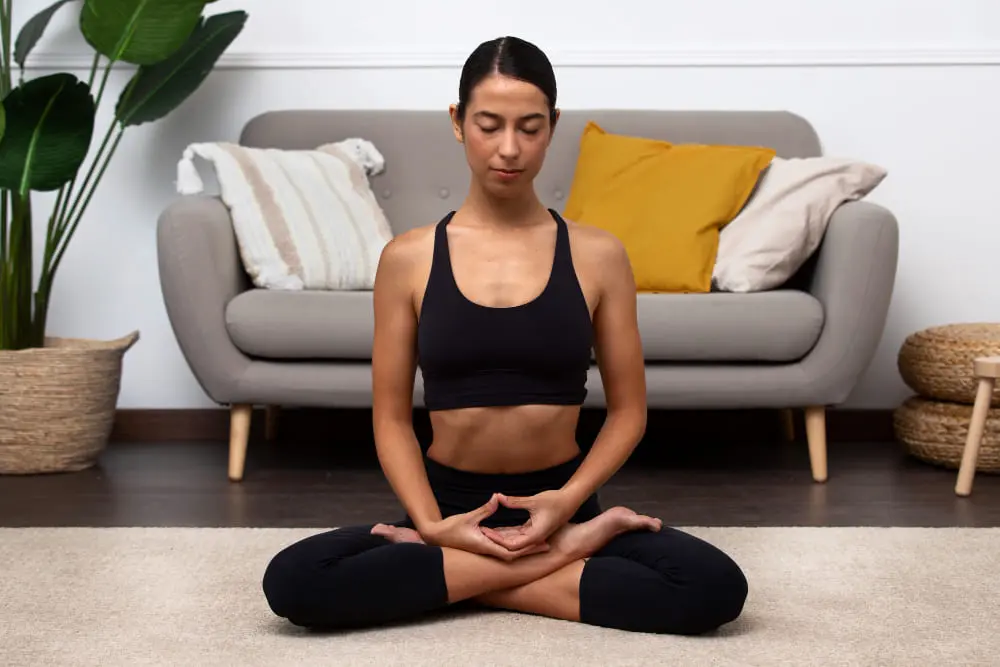
Start by finding a comfortable seated position that supports alertness without creating tension. Several options work well:
- Sukhasana (easy pose) – simple cross-legged sitting
- Padmasana (lotus pose) – traditional meditation posture
- Chair sitting – feet flat on floor, spine straight
- Cushion support – whatever keeps you upright comfortably
Your spine should rise naturally upward, allowing energy to flow freely. Avoid slouching, which leads to drowsiness during longer sessions. Position your dhyana mudra hand position carefully:
- Rest your left hand palm-up in your lap, fingers naturally extended
- Place your right hand directly on top, also palm-up
- Align the four fingers of each hand comfortably
- Allow thumbs to determine your specific variation
Thumb placement options:
- Traditional approach – thumbs touch lightly at tips, forming a gentle oval
- Parallel thumbs – maintain bowl shape without direct contact
- Theravada style – thumbs rest against palms
Your hands should rest at navel level or slightly below. Keep them close enough for comfort but not pressed against your abdomen. Elbows hang naturally at your sides. If fatigue develops, adjust slightly rather than stopping completely.
The optimal “bowl” formation requires gentle attention to hand curvature. Palms should cup slightly upward, neither completely flat nor deeply curved. This natural shape allows energy to pool and circulate while maintaining comfort during extended periods.
Integrating with Meditation
Dhyana mudra meditation begins with establishing hand position, then shifting attention to breath awareness. Start with natural breathing, observing rhythm without forcing changes. As concentration deepens, breath often becomes slower and more refined automatically.
Duration guidelines based on experience:
- Beginners: 5-10 minutes initially
- Intermediate: 15-20 minutes regularly
- Advanced: 30-60 minutes or longer
- Retreat practice: Multiple hours with breaks
Quality of attention matters more than duration. A focused 10-minute practice surpasses a distracted hour.
Mantra integration amplifies effects:
- Traditional OM – repeat silently with each breath
- Witnessing phrases – “I am aware” or “I am peaceful”
- Sanskrit mantras – work with a qualified teacher
- Natural arising – allow words to emerge spontaneously
Visualization techniques work beautifully:
- Picture golden light filling the bowl formed by hands
- Imagine the space between palms as a crystal-clear lake
- Visualize energy circulating through your body
- See the triangle of light forming above your hands
Common challenges and solutions:
- Hand fatigue – briefly separate hands while maintaining meditation
- Mental restlessness – gently return attention to breath and hand sensations
- Physical discomfort – make mindful adjustments without breaking concentration
- Drowsiness – check posture and breathing depth
Those seeking to practice meditation more deeply find this mudra particularly supportive for developing sustained concentration. The hand position provides a physical anchor that stabilizes awareness during inevitable mental fluctuations.
Energetic Connections: Dhyana Mudra Chakra Work
The dhyana mudra chakra connections primarily activate the Ajna chakra (third eye center), located between the eyebrows. This energy center governs:
- Intuition and inner knowing
- Perception beyond ordinary senses
- Discrimination between real and unreal
- Access to higher wisdom
Regular practice gradually awakens these subtle faculties, enhancing meditation depth and daily insight. Crown chakra activation occurs naturally as practice matures. The upward-pointing triangular formation directs energy toward the head’s crown, supporting:
- Experiences of transcendence
- Cosmic consciousness glimpses
- Connection to universal awareness
- Dissolution of separative thinking
Hand chakras play crucial roles in this energetic process. These palm centers receive and transmit subtle energy, explaining why hand positioning affects meditation quality so dramatically. The dhyana mudra creates optimal alignment between palm centers, facilitating smooth energy circulation.
Balancing masculine and feminine energies:
- Right hand (solar) – active awareness, discernment, analytical mind
- Left hand (lunar) – receptive wisdom, intuitive knowing, creative insight
- Combined effect – harmonized consciousness, integrated awareness
Practitioners often notice warmth or tingling in their hands during practice, indicating increased energy flow. These sensations confirm proper positioning and engagement with subtle forces. However, the absence of obvious sensations doesn’t indicate ineffective practice – energy work often occurs below conscious awareness.
Transformative Dhyana Mudra Benefits
Immediate Physical and Mental Effects
The dhyana mudra benefits manifest quickly, often within the first practice sessions. Your nervous system responds immediately as the parasympathetic response activates, reducing stress hormones and promoting relaxation.
Physical benefits include:
- Lower blood pressure and heart rate
- Reduced muscle tension throughout the body
- Improved breathing patterns and oxygen flow
- Enhanced sleep quality and deeper rest
- Better posture and spinal alignment during meditation
Mental benefits develop rapidly:
- Enhanced concentration and sustained attention
- Reduced mental chatter and worry patterns
- Improved memory and cognitive function
- Greater emotional stability during challenges
- Increased patience and reduced reactivity
Students often report improved study capacity and work focus after establishing regular practice. The mudra’s focusing effect on scattered mental energy makes it easier to notice when thoughts wander and gently return to meditation objects.
Sleep improvements reflect the mudra’s calming influence on overstimulated nervous systems. Evening practice sessions help transition from daily activities to restful states. Many practitioners find dhyana mudra benefits extend into nighttime, promoting deeper sleep cycles.
Long-term Spiritual Development
Deepened self-awareness emerges gradually as meditation practice matures. The mudra supports introspective exploration, allowing you to observe mental patterns with greater clarity and less judgment. This witness consciousness forms the foundation for genuine spiritual growth.
Emotional development includes:
- Greater emotional intelligence and regulation
- Reduced overwhelm from intense feelings
- Increased compassion for self and others
- Enhanced capacity for authentic expression
- Stronger resilience during difficult periods
Spiritual advancement encompasses:
- Access to higher states of consciousness
- Direct experience of interconnectedness
- Reduction in ego-driven behaviors
- Natural arising of wisdom and insight
- Progressive movement toward enlightenment
The mudra’s traditional association with enlightenment isn’t merely symbolic. It creates optimal conditions for transcendent states to arise naturally. While such experiences can’t be forced, proper preparation through gesture work increases their likelihood. For those seeking optimal environments to deepen practice, a dedicated retreat center offers the silence and sacred space necessary for profound inner work. Intensive practice periods allow the mudra’s full potential to unfold without daily life distractions.
Modern Applications and Daily Integration
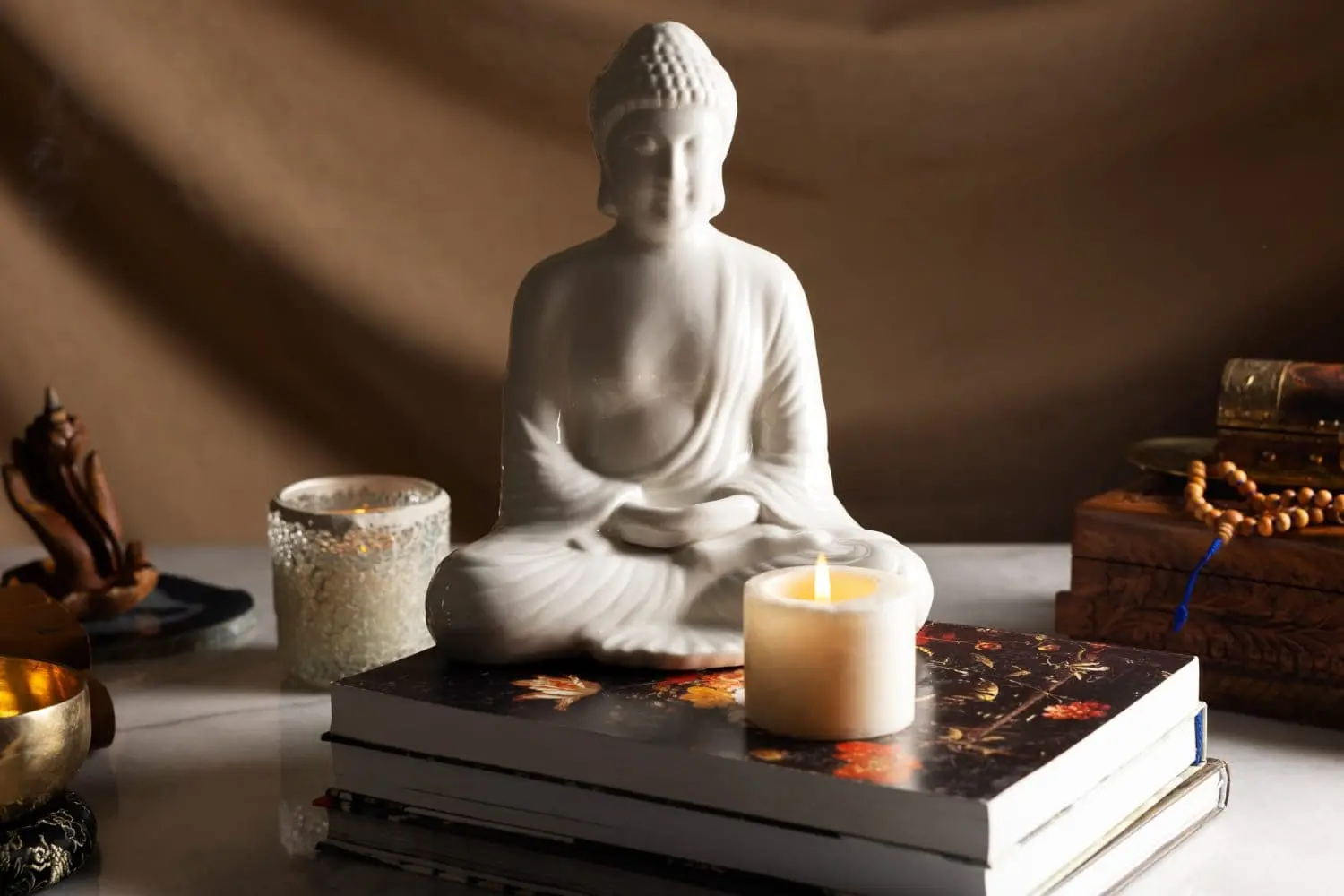
The practice of dhyana mudra extends far beyond formal meditation sessions, offering practical benefits for contemporary challenges.
Workplace applications:
- Discrete stress management during breaks
- Quick centering before important meetings
- Enhanced focus during demanding tasks
- Emotional regulation during conflicts
- Improved decision-making under pressure
Daily life integration:
- Morning intention setting before starting the day
- Commute meditation on public transportation
- Evening wind-down routines before sleep
- Stress relief during family challenges
- Grounding during overwhelming situations
Evening routines prove particularly beneficial. Sitting quietly for 10-15 minutes while holding the gesture helps transition from work concerns to restful sleep. This practice works especially well for people whose minds remain active long after physical activity ends.
Therapeutic applications in modern wellness settings demonstrate the mudra’s versatility beyond traditional spiritual contexts:
- Stress reduction clinics incorporate gesture work
- Anxiety treatment programs teach mudra techniques
- Mindfulness-based interventions include hand positioning
- Healthcare providers appreciate drug-free tools that patients can use independently
Scientific research supporting mudra effectiveness continues expanding as neuroscience explores mind-body connections. Brain imaging studies show measurable changes in areas associated with attention and emotional regulation during mudra practice.
Variations for Every Practitioner
Dhyan mudra pose adaptations ensure accessibility regardless of physical limitations or circumstances.
Single-hand variations:
- Place one hand palm-up in your lap while the other remains free
- Useful during multitasking or when arm fatigue prevents bilateral practice
- Maintains energetic benefits while accommodating necessary activities
- Particularly helpful for people with limited mobility
Standing and walking modifications:
- Let arms hang naturally, with hands forming a gesture at waist level
- Maintain positioning during walking meditation
- Adapt to movement-based practices
- Keep an energetic connection while remaining mobile
Accessibility adjustments accommodate various needs:
- Chair practitioners – rest hands on thighs rather than on the lap
- Limited hand mobility – approximate positioning within capabilities
- Arm weakness – use cushions or supports for hand placement
- Joint issues – modify thumb positioning to avoid discomfort
Group practice considerations enhance collective meditation experiences. Participants should maintain enough space to avoid hand contact while preserving group energy. Retreat venues designed for meditation accommodate groups of various sizes while supporting individual practice needs.
Different settings require adjustments:
- Home practice – create a dedicated space free from interruptions
- Office environments – adapt to available privacy and time
- Travel situations – simplified versions for planes, trains, and hotels
- Outdoor locations – adjust for weather and ground conditions
From Ancient Wisdom to Modern Practice
The dhyana mudra offers a direct path to inner peace and spiritual awakening, requiring only sincere practice and patient attention. This ancient gesture has guided seekers for thousands of years toward their deepest peace and highest potential.
Whether you seek stress relief, enhanced concentration, or profound spiritual realization, this timeless mudra provides reliable support. Its benefits range from immediate nervous system calming to long-term consciousness expansion. Modern research confirms what ancient practitioners knew through direct experience – hand positioning profoundly affects mental states and spiritual development.
The dhyna mudras and mudra dhyana traditions offer countless variations to suit individual needs and circumstances. Explore different approaches while maintaining the core elements that make this practice so powerful across cultures and centuries.
Begin where you are, practice consistently, and trust the unfolding process. Your hands hold the key to deeper states of consciousness. Through patient practice with this sacred gesture, discover the peace that has always existed within you, waiting to be uncovered through the simple act of positioning your palms in this ancient seal of meditation.