People have always needed places to gather. Whether for ritual, teaching, or simple connection, humans create spaces that feel different from everyday life. Deep in the Amazon, indigenous communities developed something extraordinary: the maloca. These aren’t just houses—they’re living examples of how architecture can hold meaning far beyond shelter. From Colombia to Brazil, Ecuador to Peru, these structures have housed entire communities for generations. Now, their ancient wisdom is inspiring retreat centers and spiritual spaces worldwide, proving some ideas never lose their power.
Key Takeaways
• Traditional malocas showcase thousands of years of architectural innovation by Amazon indigenous peoples who understood buildings as cosmic models connecting earth, sky, and community life in seamless integration.
• Circular design using natural materials creates powerful spaces for unity and spiritual connection while supporting natural rhythms through features like solar orientation and seasonal material cycles.
• Contemporary adaptations like retreat center yurts successfully preserve maloca wisdom by translating core principles to new climates and cultures while maintaining respect for indigenous origins.
• Sacred geometry from maloca traditions influences modern spiritual architecture in therapeutic communities, educational centers, and sustainable building movements seeking alternatives to conventional design.
• Indigenous building methods offer proven sustainable construction approaches using local materials, community labor, and circular economy principles that minimize environmental impact while maximizing social benefit.
• Maloca concepts show how ancient wisdom addresses contemporary needs for community connection, environmental sustainability, and spiritually meaningful spaces that serve collective rather than individual purposes.
Understanding the Maloca
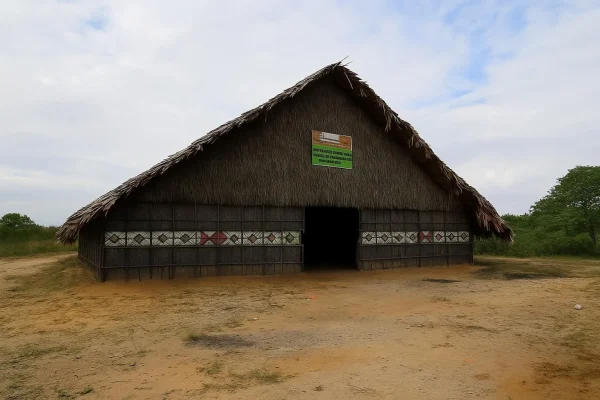
What is maloca? Think of it as the community’s living room, bedroom, meeting hall, and church all rolled into one massive structure. But that barely scratches the surface.
These aren’t houses in any sense we might recognize. Fifty to eighty people call a single maloca home. Multiple families spread throughout the space, each with their own hearth, their own section. Children play while elders share stories. Meals happen alongside sacred ceremonies. Life flows without the walls that typically separate different activities.
The indigenous peoples who build malocas see them as cosmic maps. Each maloca house represents the universe in miniature. The central area becomes “the world of knowledge”—that’s where shamans conduct their most sacred work. Four massive posts anchor everything, each representing jungle, animals, water, and universe.
Two entrances mark the structure. Men use one, women another. This isn’t restriction—it’s recognition of different roles within community life. When ceremonies begin, the entire interior transforms. Families move their belongings aside. The center clears for dancers who tell stories through movement that stretch back centuries.
Sacred Architecture
Choosing where to build requires more than finding good soil and water. The maloca place must align with forces invisible to untrained eyes but clear to those who understand cosmic relationships.
These structures exist on multiple levels simultaneously. The physical building sits on the terrestrial plane, but indigenous understanding places it between spiritual worlds above and below. Shamans navigate these different dimensions during ceremonies, traveling to places where ancestors dwell or star people gather.
Consider the Makuna people’s cosmology. They describe a universe with layers like a wedding cake. Above the physical world lie the Maloca of Sweetness, where everything is perfect, and the Maloca of Star People, where celestial beings live. Below stretches the Maloca of Sadness, home to the dead, and the Umarí River, the underground path the sun follows each night.
Two triangular openings face east and west. Every morning, light enters through the eastern window, slowly moving across the four central posts as the sun climbs. At midday, the interior darkens—the transition between the worlds of music and knowledge. Then afternoon light streams through the western opening, completing the daily cycle.
This isn’t just pretty architecture. These light patterns tell time, mark seasons, indicate when to plant or harvest or hold specific ceremonies. The building becomes a calendar that never needs updating, a clock that runs on sunlight.
Traditional Construction
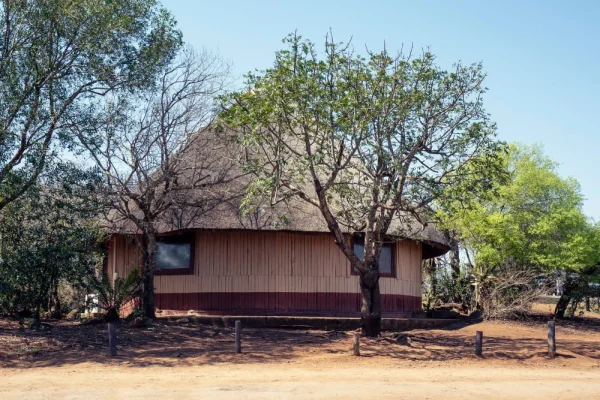
Building a maloca takes months and entire communities. Men gather materials and assemble the framework. Women prepare fibers and organize interior spaces. Children help where they can and learn by watching. Even the construction process teaches cooperation.
The materials come from the forest itself:
- Palm fronds create waterproof roofing that breathes with humidity changes
- Hardwood posts resist insects and weather while supporting enormous weight
- Flexible slats bend without breaking during storms
- Natural fiber ropes stretch and contract with seasonal moisture
- Clay and plant-based sealers protect joints from rot
Knowledge passes from older builders to younger ones during construction. Which trees make the best posts? When should palm fronds be harvested for maximum durability? How do you tie joints that flex but don’t fail? These aren’t things you read in books—they’re learned through doing, through making mistakes, through years of practice.
The finished structure embodies principles modern architects are rediscovering. Flexible joinery lets the building move during storms rather than fighting forces that could tear it apart. Elevated positioning prevents flood damage while allowing air circulation. Natural ventilation keeps interiors comfortable without mechanical systems.
Most remarkably, everything eventually returns to the earth. When a maloca reaches the end of its useful life, families simply move on. The structure decomposes naturally, enriching the soil for whatever grows next. No waste, no permanent scars on the landscape. The building lives, serves its purpose, then becomes part of the forest again.
This isn’t primitive construction—it’s sophisticated engineering that works with natural systems rather than against them. The techniques represent generations of observation, experimentation, and refinement. They solve problems modern buildings often create.
Ancient Wisdom in Contemporary Spaces
Something about circular sacred spaces speaks to people across cultures. Maybe it’s genetic memory of gathering around fires. Maybe it’s the way circles naturally include everyone. Whatever the reason, maloca principles are finding new life in retreat centers and spiritual communities worldwide.
Yurts offer the most direct translation. These Mongolian structures share the circular footprint, natural materials, and community focus that define malocas. Modern versions adapt ancient wisdom to different climates while preserving what matters most—the feeling of unity and connection that circular spaces create.
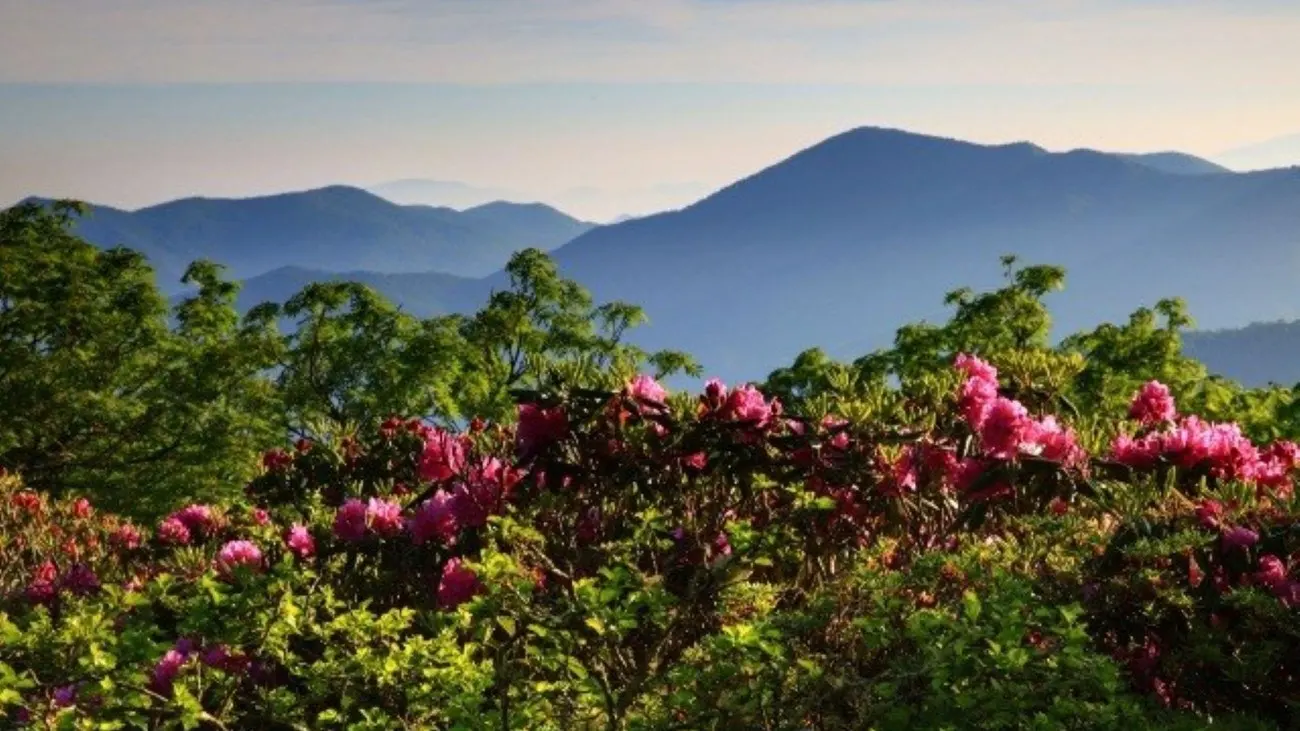
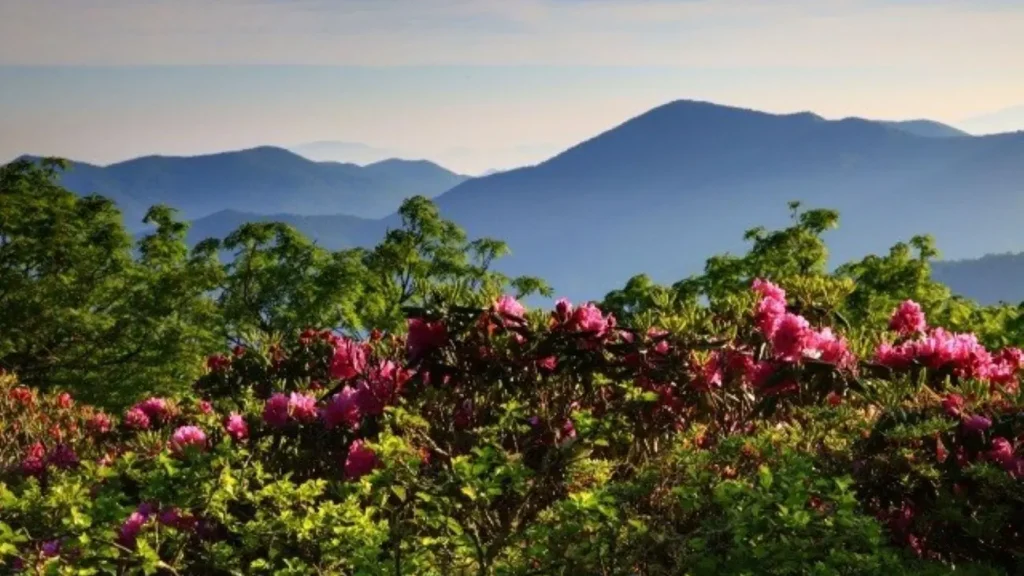
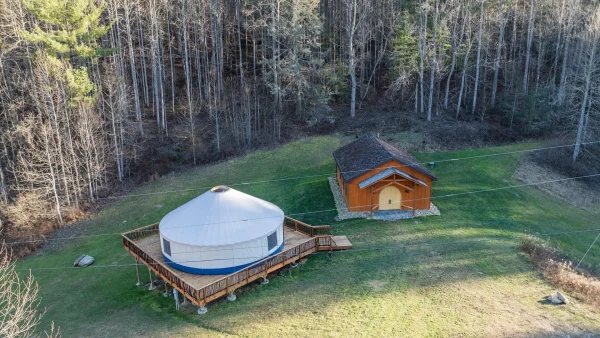
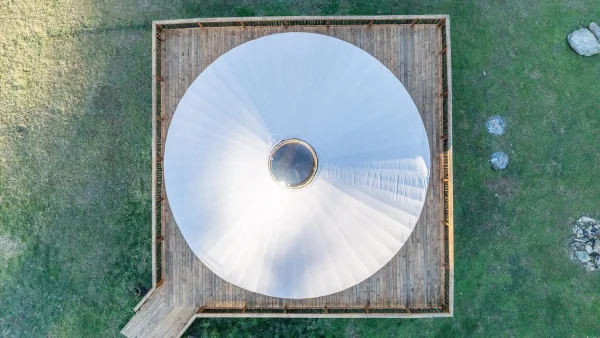
The Celestial Center at Wheel of Bliss demonstrates thoughtful adaptation. This 33-foot diameter yurt sits in the Blue Ridge Mountains, creating sacred space that honors indigenous principles while serving contemporary needs.
What makes the Celestial Center special:
- Glass dome ceiling connects interior and sky, like maloca roof openings
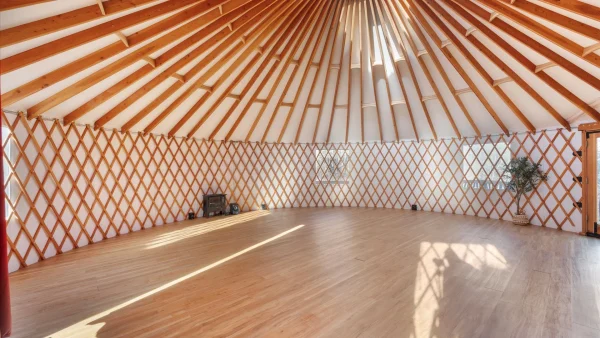
- Bamboo flooring provides natural, flexible foundation
- Lattice walls allow air flow and visual connection with surrounding forest
- Mountain valley setting creates separation from everyday distractions
- Spacious interior accommodates groups while maintaining intimacy
The structure sits on a large deck overlooking mountain valleys. Participants can step outside and see for miles, gaining perspective that indoor spaces rarely provide. This integration of architecture and landscape reflects indigenous understanding—buildings should enhance natural beauty, not compete with it.
Other adaptations appear in therapeutic communities using circular meeting spaces, educational programs teaching sustainable building, and architects incorporating indigenous techniques into contemporary designs. Each adaptation faces the same challenge: preserving essential principles while adapting to new contexts.
The most successful modern applications focus on universal elements rather than specific cultural details. Circular geometry, natural materials, community orientation, cosmic awareness—these translate across cultural boundaries. Sacred symbols or ceremonial elements specific to particular tribes require more careful handling, if they should be adapted at all.
Spiritual Practices
Modern retreat centers discover that circular spaces naturally support certain activities. Group meditation works better when everyone sits at equal distance from the center. Sound healing benefits from the acoustic properties circular walls create. Yoga flows differently when practiced within a circle rather than in rectangular rooms.
At Wheel of Bliss, the Celestial Center hosts meditation groups, yoga retreats, and sacred ceremonies that draw inspiration from indigenous gathering traditions. The space accommodates dozens of participants while maintaining the intimate atmosphere essential for transformative experiences.
Activities that thrive in circular sacred spaces:
- Group meditation with everyone facing the center
- Sound healing ceremonies enhanced by natural acoustics
- Yoga practices connecting movement with natural rhythms
- Therapeutic circles emphasizing equal participation
- Educational workshops about sustainable living and indigenous wisdom
The glass dome ceiling creates dramatic lighting changes throughout the day. Morning sessions begin with soft eastern light filtering through the lattice walls. Afternoon gatherings bathe in golden mountain light. Evening ceremonies occur beneath star-filled skies visible through the central opening.
These natural rhythms support practices aimed at reconnecting with earth’s cycles. Participants often comment on feeling more grounded, more present, more aware of time’s passage when practicing in spaces designed to showcase rather than block natural light.
But adaptation requires care. Indigenous spiritual practices belong to specific cultures, developed over generations to serve particular communities. Modern practitioners can learn from architectural principles and community-building approaches without appropriating sacred elements that aren’t theirs to use.
The goal becomes translation rather than copying. Taking the idea of cosmic orientation without claiming specific cosmologies. Using circular design without adopting particular ceremonial practices. Learning from indigenous wisdom while respecting its cultural origins.
Preservation and Future
Traditional maloca communities face real threats. Deforestation destroys the forests that provide building materials. Cultural pressure pushes young people toward urban areas and modern lifestyles. Government policies often ignore indigenous land rights and traditional practices.
Yet many communities resist these pressures. They continue building malocas, holding ceremonies, making decisions through traditional processes. Ironically, they often hold their organizing meetings about land rights and cultural preservation inside the very structures being threatened.
Modern adaptations help preserve indigenous knowledge by demonstrating its continued relevance. When contemporary communities successfully implement maloca principles, they validate indigenous wisdom while creating examples others can follow.
Educational programs play crucial roles too. Teaching indigenous building techniques, sustainable material use, and community cooperation helps non-indigenous people understand the sophisticated thinking underlying traditional architecture. This recognition can translate into political support for indigenous rights and environmental protection.
The growing interest in circular sacred spaces reflects broader cultural shifts. People seek alternatives to the isolation and environmental destruction conventional development creates. They want community, sustainability, spiritual meaning—exactly what indigenous architectures have always provided.
FAQ
How does a modern yurt compare to a traditional maloca?
Both use circular geometry to create unity and spiritual atmosphere, but yurts adapt to different climates using contemporary materials. The essential elements—community focus, natural materials, cosmic orientation—remain consistent while surface features change for practical reasons.
Can non-indigenous people ethically build maloca-inspired spaces?
Yes, when done respectfully with proper acknowledgment of indigenous origins. Focus on universal principles like circular design and community cooperation rather than copying specific sacred elements that belong to particular cultures.
What makes the Wheel of Bliss Celestial Center unique?
This 33-foot yurt incorporates maloca principles through circular sacred geometry, natural bamboo flooring, and dome ceiling connecting interior with sky. The mountain setting enhances the separation from ordinary life that traditional malocas provide.
Do indigenous communities still build traditional malocas?
Absolutely. Many Amazon communities continue this practice while adapting to modern challenges like deforestation and cultural pressure. These groups also use their malocas for political organizing to protect land rights and cultural traditions.
What activities work best in circular sacred spaces?
Group meditation, sound healing, yoga, ceremonial gatherings, and therapeutic circles all benefit from circular architecture. The design naturally promotes equal participation and shared energy flow that enhances collective spiritual experiences.