A few days away in winter bring you back to yourself by stripping out the messages and other people’s needs that keep your attention pointed outward. Cold, short days work in your favor here, a point several studies on solitude and time outdoors back up. We host wellness retreats in North Carolina’s Blue Ridge Mountains, so the planning notes here are specific to a mountain winter near Hot Springs.
You’ll learn
- Why a 25°F January walk did as much for attention as an 80°F summer one
- The 15-minute habit that calmed people down in a series of experiments
- What made two-thirds of the men in one study reach for an electric shock
- Seven quiet practices that work on a mountain property in the cold months
- How many nights we’d suggest for a first winter stay
- The road and trail checks worth making before you drive to Hot Springs
What You’re Reconnecting With on a Winter Retreat
Reconnecting with yourself means taking back the attention that daily life spends on your phone and your to-do list. That attention comes back to you on a winter retreat, so you start noticing how tired you are, which decision you’ve been putting off, and what you’d do with a free afternoon if nobody needed anything from you.
If seated meditation is how you’d like to get there, our guide to choosing a meditation retreat for the colder months covers what to look for in a center.
Why the Cold Months Make It Easier to Hear Yourself Think
Short days pull evenings indoors early and leave less on the calendar to plan around. For anyone trying to turn inward, that thinner schedule helps more than it sounds. Leafless hardwoods change the walking too. With the canopy gone, you get views across the ridges that summer foliage hides, plus quieter trails once the cold sets in.
Researchers at the University of Michigan found that cold weather doesn’t cancel the payoff of time outside. After a walk of about an hour through an arboretum, memory and attention scores rose by about 20%, with the same gain on a 25-degree January day as on an 80-degree summer one. Participants didn’t even have to enjoy the walk for it to work. A walk along busy downtown streets produced no such improvement in the original paper in Psychological Science. The authors credit attention restoration theory for the difference. That theory holds that natural settings catch your eye gently enough for the effortful focus you burn through at work to refill.
What Solitude and Outdoor Time Do on a Winter Wellness Retreat
Three results from psychology research explain why a few quiet days on a winter wellness retreat can change how you feel. One of them is less flattering than retreat brochures let on.
1. Fifteen Minutes Alone Turns Down the Emotional Volume
Time by yourself without a phone settles strong emotions in both directions. In a series of experiments at the University of Rochester, 15 minutes of device-free solitude lowered high-arousal feelings like excitement or anxiety, with calm going up in their place. Loneliness could creep up too. People who chose to be alone and steered their own thoughts got the calm with less of the downside, which, on a retreat, means deciding for yourself when your alone time happens.
2. Two Hours Outside a Week Is Where the Benefit Starts
Spending at least 120 minutes a week in nature was tied to better self-reported health and wellbeing in a cross-sectional survey of nearly 20,000 people in England. Below that line, the researchers saw no measurable gain. The association peaked somewhere between 200 and 300 minutes, with one long visit counting the same as several short ones. A survey like this can only show a link, but it puts a number on how much outdoor time to aim for.
3. The First Day Can Feel Restless, and That’s Normal
Sitting alone with nothing but your thoughts tends to feel unpleasant at first, which a set of 11 studies published in Science showed in an almost funny way. Participants generally didn’t enjoy being left alone for 6 to 15 minutes. In one of the studies, 67% of men and 25% of women gave themselves a mild electric shock to break up a 15-minute stretch of quiet.
If day one on the mountain has you reorganizing the kitchen or wandering around looking for a signal, nothing has gone wrong. A few simple structures give those restless hours somewhere to go.
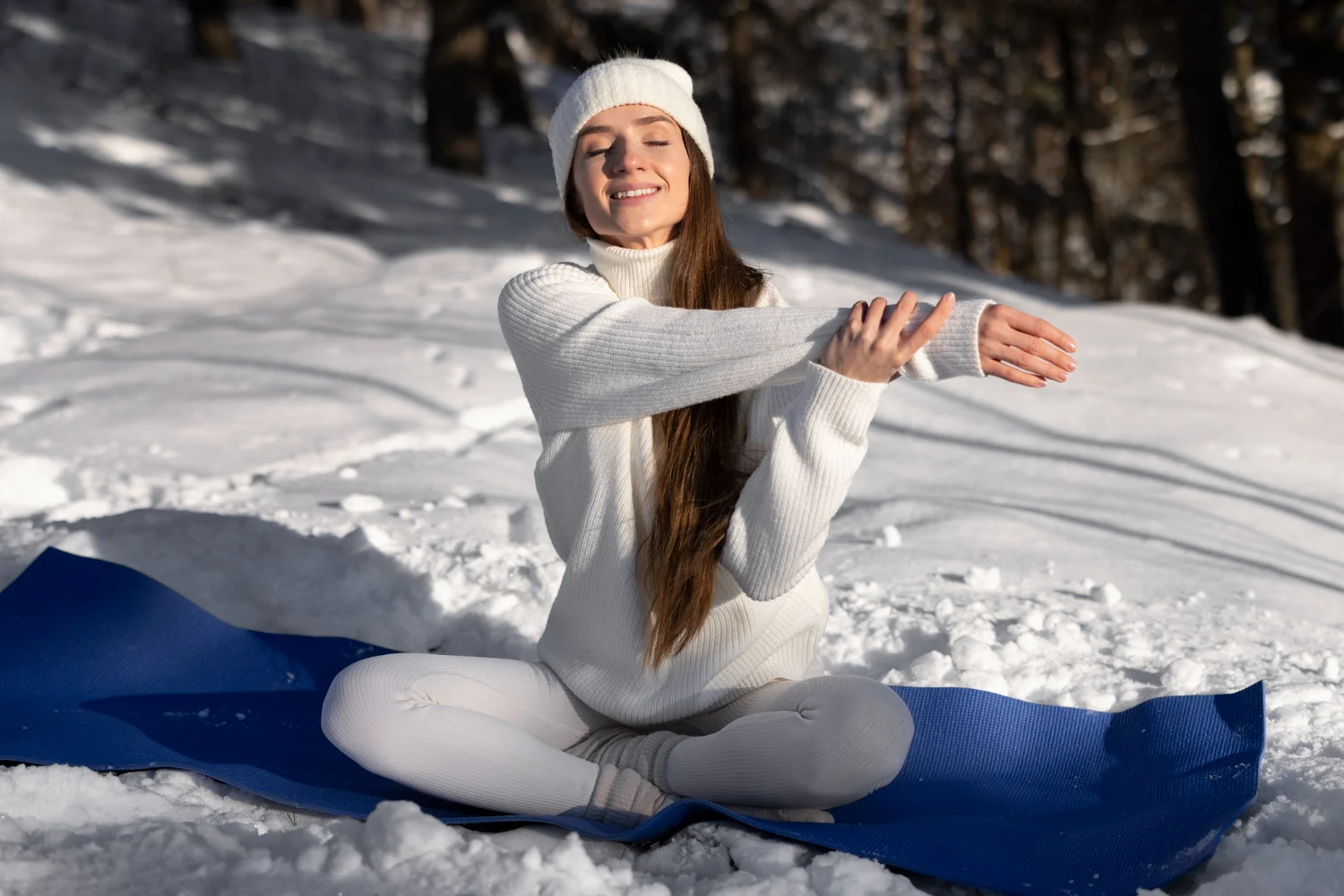
Winter Retreat Ideas for Getting Your Attention Back
What separates useful ideas for a winter retreat from busywork is that they take something out of your day more than they add to it. Every practice in this table works on our land in the cold months.
| Idea | What you do | Done | Time it takes |
|---|---|---|---|
| Silent mornings | Nobody talks from waking until lunch, even in a shared house | Together | Half a day |
| Phone in a drawer | Put it away on arrival and check it once each evening | Either way | The whole stay |
| One question, every morning | Answer the same journal question daily and watch the answer change | On your own | 10 minutes a day |
| Trail walk without headphones | Pick one of the five trails and walk it alone | On your own | About an hour |
| Stargazing from the yurt | Lie on the Celestial Center floor and watch the night sky through its glass dome | Together | An evening |
| A dip in spring-fed water | A brief, optional plunge in a creek or under a waterfall | For the brave | A few minutes |
| One-turn fire circle | Each person speaks once around the fire pit, with no replies | Together | An hour |
For yoga, aromatherapy, and other ways to fill the indoor hours, our roundup of wellness activities for a cold-weather stay goes wider.
Choosing two or three practices from the table works better than cramming all seven into one weekend, since a full checklist rebuilds the busy schedule you drove into the mountains to leave behind.
How Many Nights a Winter Retreat Should Last
We’d steer most first-timers toward two or three nights, since a single day ends right about when the fidgeting does. Program style is a separate choice, covered in our piece on weighing yoga, meditation, and detox programs for the season.
| Length | What it’s good for | How it works at Wheel of Bliss |
|---|---|---|
| One day | A reset, or a test of how quiet suits you | Day retreats run morning to evening in Bliss House, the Celestial Hall and Center, or all three |
| A weekend | Two full days of quiet with no rush on either end | Bliss House sleeps 16 across six bedrooms |
| A week or longer | Facilitated programs, or decisions that need more than a weekend of thought | Reserve Everything opens all three buildings and every trail |
Planning a Winter Retreat in the North Carolina Mountains
Our land sits outside Hot Springs, a small Madison County town that calls itself the only place in North Carolina where the Appalachian Trail runs down the main street. Its tourism association notes that winter weather in town holds off until January, because the surrounding mountains shelter the river valley from the harsher conditions found higher up. Back roads into the hills can still ice over sooner.
Wheel of Bliss covers 63 acres backed by hundreds of acres of Pisgah National Forest, about an hour from Asheville, with five trails, spring-fed streams, and waterfalls. When rain or sleet moves in, the Celestial Center yurt keeps group practice going indoors, with windows that roll open to the sound of water in the distance.
A few practical checks keep a winter stay at an NC mountain retreat on schedule.
- Look up road conditions before you leave, because snow and ice can slow travel on mountain roads
- Plan to arrive in daylight
- An AWD vehicle helps after a fresh snowfall
- Traction cleats are worth packing if you’ll walk trails after a hard freeze
- Anyone planning a creek dip should read up on what cold water exposure does for immunity and keep dry layers by the door

Keeping the Calm After You Head Home
An unscheduled day at home before work restarts keeps the drive back from dropping you straight into your inbox. Holding to the phone-in-a-drawer rule for one more morning helps in the same way.
Before you drive off the mountain, write down the one practice you’d miss most and put it on your calendar for the following Saturday. When you’re ready to plan one of our wellness retreats for your group, send us your dates and headcount so we can tell you which buildings fit.
FAQ
Is there Wi-Fi?
Yes, there's Wi-Fi in Bliss House, though how much your group uses it is your call.
Can we bring our dog?
We normally allow up to two dogs, plus service animals. Let us know ahead of time if you're hoping to bring more.
Do we have to book the whole property?
No, you can reserve Bliss House, the Celestial Hall, or the Celestial Center on its own, or any combination of them for the same dates.
Can people sleep in the Celestial Hall?
Yes, the Celestial Hall allows overnight lodging on four cots, or guests can bring their own sleeping setup.
Is there parking for a large group?
Yes, groups can park along our private road or in the meadow near the Celestial Hall and Center.
How does check-in work?
Our on-site manager meets you for check-in and a walkthrough of the house. A caretaker is on site during your stay if you need anything.