One amazing approach to improve your yoga practice and expand your relationship with someone else is partner yoga. Lover yoga adds a playful, cooperative component to classic yoga, whether you’re working with a friend, lover, or family member. Working together to reach various yoga positions not only increases your physical strength and flexibility but also helps you to develop trust, enhance communication, and create enjoyable and laughing moments. Perfect for anyone wishing to investigate yoga in a shared experience, this guide will introduce you to several useful and easy partner yoga poses.
Why Try Partner Yoga?
Beyond only the physical components of yoga, partner yoga provides a special experience. It fosters cooperation and connection that improves your relationship and your physique. Among the main advantages of partner yoga are better communication. By means of shared positions, couples have to clearly coordinate their motions and guarantee both comfort. In a way that individual yoga cannot, this can enhance the emotional link between couples and foster trust.
Partner yoga also helps one build confidence. Your partner helps you during postures, therefore fostering a closer degree of trust and cooperation. Couples or close friends may particularly find this element of partner yoga very fulfilling since it develops an emotional connection that transcends the mat.
Furthermore improving strength and flexibility is doing partner yoga. Many yoga poses call for a partner’s help so that both participants may maintain positions longer and stretch farther than they might on their own. This collaborative practice not only increases the efficacy of the poses but also injects some enjoyment into your yoga path.
Partner yoga offers advantages not only for couples. To deepen their relationship, friends, siblings, even parents and children should practice this. Partner yoga is a fun experience for all those engaged since its dynamic and playful character can generate laughter and happiness. It promotes understanding and teamwork, which can assist in strengthening bonds both on and off the mat. Practicing partner yoga helps you to better value your spouse’s talents and abilities, therefore strengthening your connection.
How Partner Yoga Enhances Your Connection
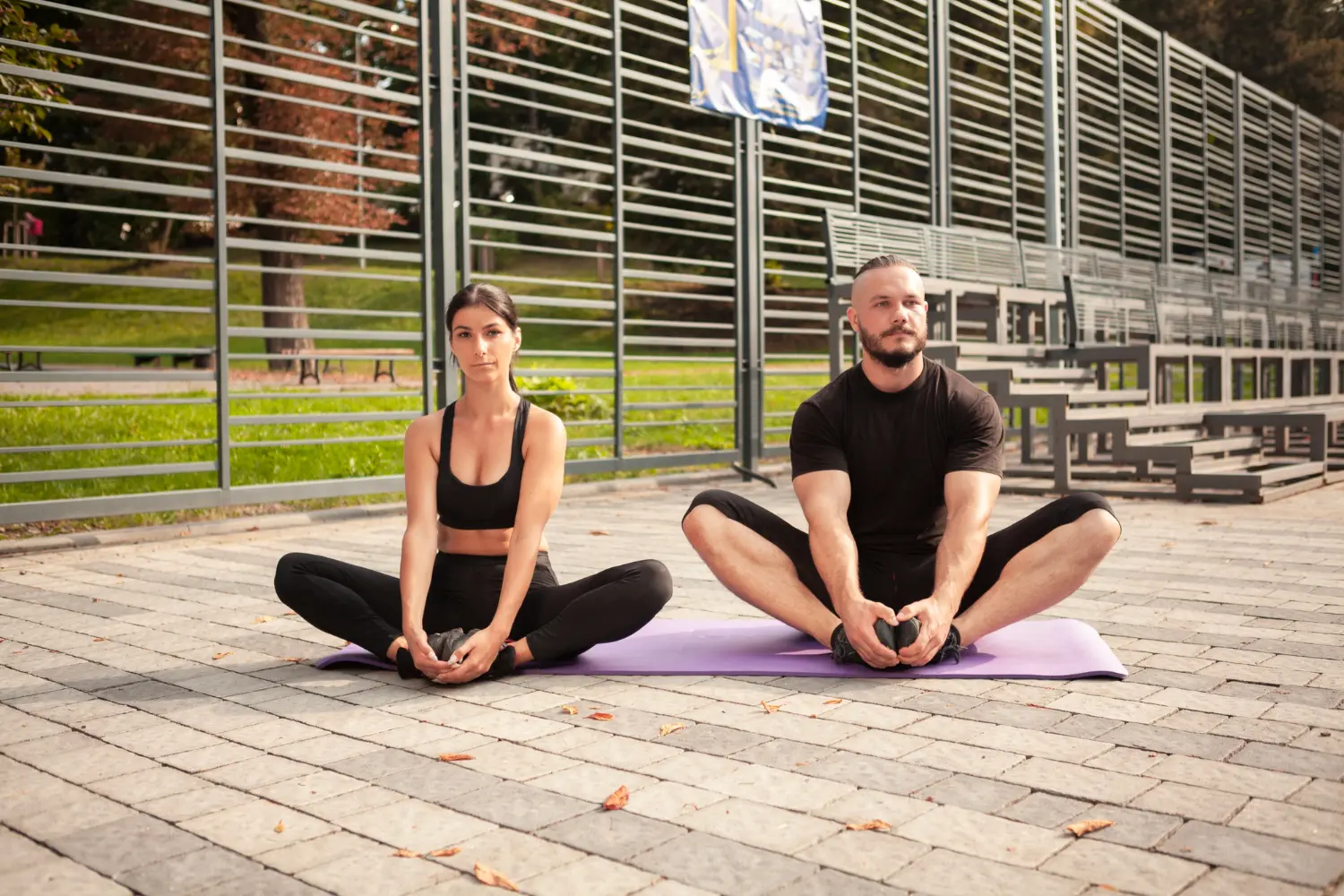
The way partner yoga helps to establish both emotional and physical ties is among its most important features. Synchronized motions call for cooperation and communication, which can help couples to become much more connected. In partner yoga, every yoga posture calls for partners to move in unison, adjust to each other’s requirements, and listen to one another.
Partner yoga builds trust. Whether you are supporting each other during a stretch or in a balancing position, you have to believe your partner will keep you steady and offer the required support. The foundation of what makes partner yoga so successful in enhancing relationships is this element of trust-building.
Moreover, doing partner yoga opens chances for connection partner exercises. Your emotional link gets stronger with the physical closeness and cooperative need. Often referred to as “breath partners,” breathing together helps coordinate the energies of couples, therefore improving the experience and strengthening their relationship. This kind of oneness can be quite strong and help you both to become more sensitive to one another emotionally and physically.
Partner yoga improves nonverbal communication as well. Practicing poses together helps you to read your partner’s body language, pick up faint clues, and modify your own. Developing a closer relationship depends on this nonverbal communication, which also improves understanding and empathy in other spheres of your life.
Moreover, helping each other physically during partner yoga positions enhances the emotional link. You are practically supporting each other, which can also help one to feel emotionally supported. This can especially help in trying circumstances since it helps you to realize that you are not alone and that you can count on your spouse.
Tips for a Successful Partner Yoga Practice
For a safe and enjoyable partner yoga session, it’s important to keep a few practical tips in mind:
- Communicate Openly: Communication is a significant factor in partner yoga. Speak with your partner about how each yoga pose feels, and don’t be afraid to speak up if something feels uncomfortable. Open communication will make it more enjoyable for both. It is also very important to communicate intentions and goals for this practice so that both are working for one objective.
- Focus on Alignment: Proper alignment is important for injury prevention. Pay attention to the posture of the other, and guide your partner into proper alignment. Supporting each other in maintaining alignment will make each yoga pose more effective. Use mirrors if available to check your alignment, or take photos to evaluate and improve your poses over time.
- Stay Comfortable: Always prioritize comfort over pushing yourself too far. Partner yoga is meant to be fun and enjoyable, so don’t push beyond your comfort level. Use props like cushions or yoga blocks if needed to ensure both partners feel supported. Ensuring comfort also means being aware of each other’s physical limitations and adjusting accordingly.
- Respecting Bounds: Be very gentle, respect the limits of your partner’s body. Each yogic posture may not fit your partner’s need or, better said, just would not feel right for any human; modifications could make some poses more friendly and palatable for them. Through mutual respect, one makes a better practice and enhances a loving relationship. Respecting their bounds makes them feel cared about as they will keep safe, thereby cultivating trust, the ingredient most essential for an optimal Partner Yoga practice.
- Set the Mood: Have an environment that will facilitate good relaxation and connection. That might mean practicing in a quiet space, playing calming music, or lighting candles. The right setting will amplify your practice and give back to both partners meaning.
- Warm Up Together: Begin your partner yoga session by warming up together. Light stretching, some synchronized breaths, or a brief meditation on the spot will get your energies aligned and ready to take on more difficult moves together.
Top Partner Yoga Poses to Try
Ready to try some fun and effective partner yoga poses? Here are some popular ones that can help enhance strength, flexibility, and connection:
1. Partner Forward Fold
Sit back-to-back with your legs extended straight in front of you. Inhale deeply, and as you exhale, both partners slowly fold forward, using each other’s backs for support. This yoga pose helps stretch the hamstrings and lower back while creating a sense of shared support. It also encourages deep breathing and relaxation, helping both partners to release tension. To deepen the stretch, you can try gently pressing against each other’s back to provide additional resistance, but make sure to communicate clearly to avoid discomfort.
2. Double Downward Dog
One partner begins in a traditional Downward Dog position. The second partner then places their hands a few feet in front of the first partner’s hands and carefully steps their feet onto the lower back of the first partner, creating an inverted V shape. This yoga pose builds strength in the arms, shoulders, and core while also enhancing flexibility in the hamstrings and calves. Double Downward Dog requires both balance and communication, making it an excellent pose for building trust. The partner on the bottom should ensure their back is strong and stable, while the partner on top should distribute their weight evenly and remain mindful of the base partner’s comfort.
3. Partner Boat Pose
Sit facing each other, with your knees bent and feet touching. Hold each other’s hands and lift your feet so that your soles press against your partner’s. Slowly straighten your legs, creating a V shape with your bodies. Partner Boat Pose strengthens the core, improves balance, and encourages teamwork. The pose can be held for several breaths, focusing on maintaining a steady gaze and synchronized breathing. To add variation and challenge, try releasing one hand and reaching it towards the sky or alternate leg lifts to test your stability and coordination. This pose is also great for building abdominal strength and enhancing focus.
4. Supported Backbend
Stand back-to-back with your partner and interlock your arms. Gently lean away from each other, creating a supported backbend. This yoga pose opens the chest and stretches the spine, providing a gentle heart opener while promoting trust and connection. It also helps release tension in the back and shoulders, making it an excellent pose for reducing stress. To deepen the backbend, you can bend your knees slightly and lean further away from your partner, allowing for a more intense stretch in the chest. Always ensure that both partners are comfortable and feel supported to avoid injury.
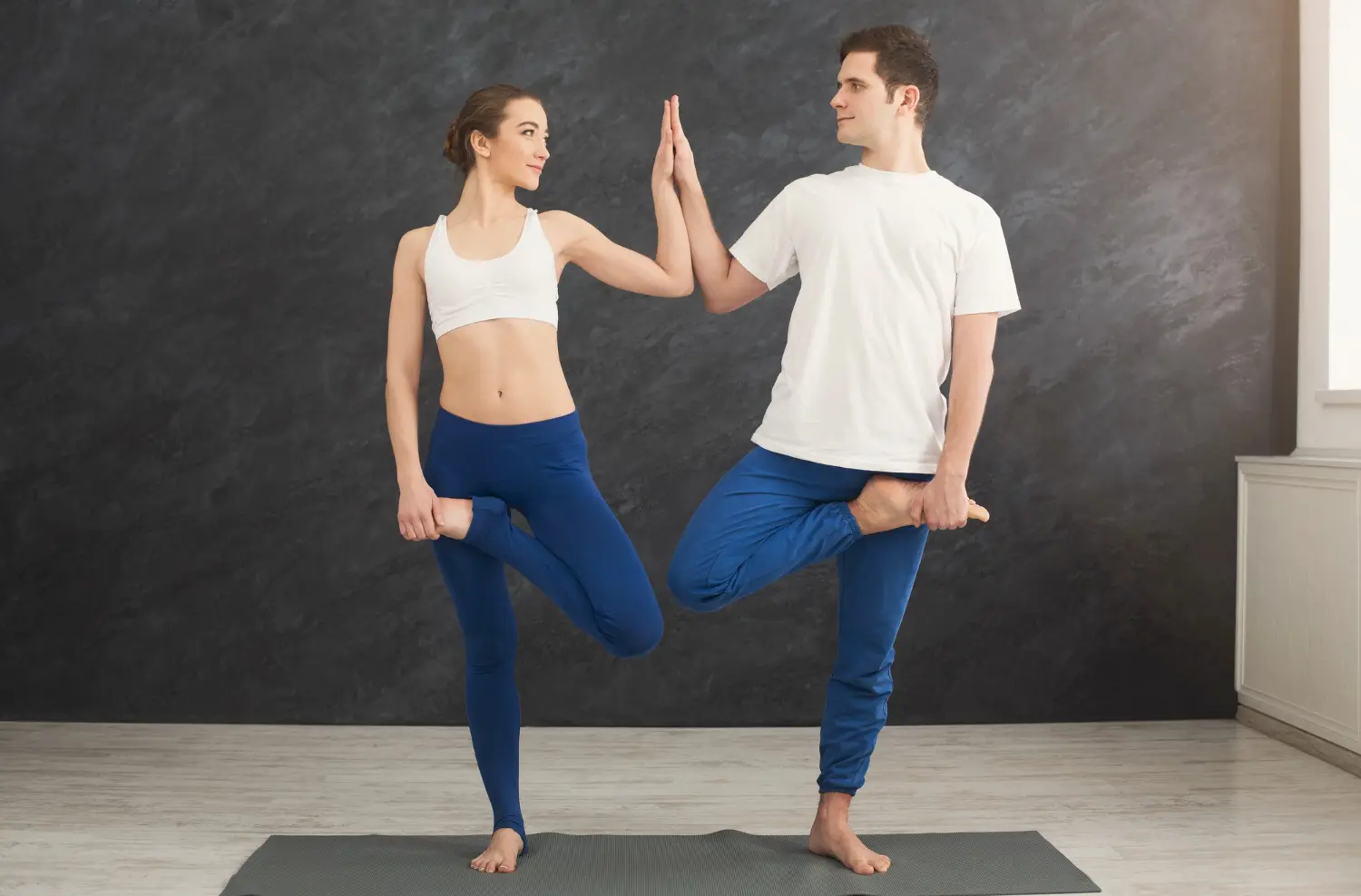
5. Twin Tree Pose
Stand side by side, with your inside arms wrapped around each other’s waists for support. Place the sole of your outside foot on the inner thigh of your standing leg, and bring your outside arm up towards the sky. This variation of Tree Pose helps with balance and stability, and the shared support fosters a sense of unity. Twin Tree Pose also encourages you to focus on your breath and maintain your balance together, symbolizing mutual growth and support. To challenge your balance further, you can try closing your eyes or lifting your inside arm to join your outside arm above your head, creating a full overhead stretch.
6. Seated Cat-Cow
Sit cross-legged facing each other and hold each other’s forearms. As one partner inhales and arches their back (Cow Pose), the other exhales and rounds their spine (Cat Pose). Alternate these movements for several breaths. This yoga pose encourages synchronized breathing and helps stretch the spine, enhancing the connection between partners. It also helps improve flexibility in the back and promotes relaxation. For a deeper stretch, you can gently pull on each other’s forearms as you move into Cow Pose, increasing the arch in your back and opening the chest further.
7. Double Warrior III
Stand facing each other, about an arm’s length apart. Hold hands, and both partners hinge forward at the hips, lifting one leg straight back to come into Warrior III. This yoga pose challenges balance and builds strength in the legs, glutes, and core. Double Warrior III requires focus and coordination, and by holding hands, partners can help stabilize each other. To increase the difficulty, try releasing one hand while maintaining balance or alternate legs to work on both sides of the body. This pose encourages both physical strength and mental focus, making it a great addition to any partner yoga practice.
8. Partner Plank High-Five
Both partners come into a plank position facing each other, with enough space between them to reach out comfortably. While holding the plank, lift your right hand and give your partner a high-five, then switch to the left hand. Continue alternating for several repetitions. This yoga pose helps build core strength, shoulder stability, and endurance while adding a fun, interactive element. It also encourages coordination and timing, as partners need to move in sync to maintain balance.
9. Flying Bow Pose
One partner starts by lying on their back, with their knees bent and feet flat on the floor; this is the base. The other partner, the flyer, stands near the base’s feet and lifts their legs onto the flyer’s hips. The flyer leans forward, and the base supports its weight by straightening its legs to allow the flyer to lift into a bow-like position. Flying Bow Pose requires great trust, good communication, and strength in both partners. This will open up the chest, stretch the spine, and build general body strength. Flying Bow is a very thrilling and challenging pose that is based on stability and trust.
How to Progress in Partner Yoga
Once you feel comfortable with basic partner yoga poses, you can begin to deepen your practice. Here are some ways to progress:
- Gradually Increase Difficulty: Start with simple poses and gradually move to more challenging ones. As you build strength and trust, you can attempt more advanced yoga poses that require greater balance and coordination. For example, try transitioning from Double Downward Dog to Flying Bow Pose, which adds an extra layer of complexity.
- Incorporate Advanced Poses: Try adding more complex poses like Partner Plank or Flying Bow Pose. These poses require a higher level of strength and trust, making them a great way to challenge yourselves and grow together. Partner Plank helps build core strength and endurance, while Flying Bow Pose combines flexibility and strength, requiring the base partner to support the flyer in a dynamic stretch.
- Focus on Breath: As you progress, pay closer attention to synchronizing your breathing. Practicing “breath partners” can help deepen your connection and make each yoga pose more meaningful. This shared breathing can enhance the physical and emotional benefits of partner yoga. Breathing in sync creates a sense of unity and can help both partners move more fluidly through transitions.
- Add Flow Sequences: Create a sequence of partner yoga poses that flow smoothly from one to the next. Moving through a series of poses together requires coordination and enhances the connection between partners. For example, you could transition from Twin Tree Pose to Double Warrior III, followed by Partner Boat Pose, creating a flowing sequence that challenges both partners physically and mentally.
- Reflect on Your Practice: Take a moment after each session to reflect on what worked and what didn’t. Discuss how each pose felt, what challenges you faced, and how you can grow together. This reflection will help you continue to evolve and strengthen your connection-partner bond. Consider keeping a journal of your partner yoga journey to track your progress and celebrate milestones.
- Try Different Styles: You can try working with different styles of yoga into your partner yoga. For example, you may try incorporating elements of AcroYoga, which combines acrobatics with yoga, or Restorative Yoga, which looks toward relaxation and gentle support. These variations can bring diversity into your practice and also help you find new ways to connect.
Partner yoga is an excellent way to improve your health and strengthen your relationship. You get better in communication, building trust, and emotionally connecting with each other while doing the yoga asanas together. Be it strength, flexibility, or just fun with your partner, there’s something for everyone in partner yoga. Enjoy the process, have fun, and let partner yoga bring you closer to your partner both on and off the mat. It’s a beautiful way to grow physically, emotionally, and relationally, nurturing the bond you share.
But in practice, such movements should be gradually advanced by incorporating challenging positions and breath awareness to maximize your connection. It doesn’t involve just the physical execution of asanas; much emotional and spiritual development of an individual can take place by working together in tandem. Take out the mats and pick a partner—get ready for all those massive benefits to flow from this practice. Equally as important as the destination is the journey, and with each practice, you will find yourselves growing closer, more connected, and more in tune with one another.