Chakras form energy centers within your body that affect physical health, emotional stability, and spiritual connection. Each chakra color radiates at unique frequencies tied to specific aspects of well-being. Balance among these centers creates vitality and peace, while blockages lead to discomfort and distress. Learning to work with chakra colors opens pathways to restore harmony and enhance your daily experience.
Understanding the Chakra Color System
Ancient Indian traditions first documented these energy wheels thousands of years ago in Sanskrit texts. These centers spin continuously, distributing vital energy throughout your body. Each one operates at distinct frequencies that manifest as specific colors of chakra, reflecting different elements of human experience.
These chakra colors go beyond mere symbolism. Much like sunlight breaking through a prism into rainbow hues, your energetic anatomy contains this full spectrum, with each center resonating at particular frequencies matching its color. Colors affect us on deep psychological levels. Red generates energy and stimulation. Blue produces calm and tranquility. Yellow creates clarity and optimism. These effects parallel the chakras’ functions, creating fascinating connections between color psychology and energy healing.
A complete approach to chakra balancing examines how these colors interact within your physical, emotional, and spiritual aspects. Wheel Of Bliss provides pathways to incorporate this timeless wisdom into present-day wellness practices, helping you apply traditional concepts to modern life challenges.
The Seven Main Chakras and Their Colors

Root Chakra (Red)
Your root chakra sits at your spine’s base, linking you to earth energy. This foundation supports your security, stability, and survival needs. When functioning properly, you feel grounded, safe, and capable of handling life’s demands.
The chakra color meaning here represents life force, strength, and passion. Deep, vibrant red stimulates physical energy, boosts circulation, and activates survival instincts. A healthy red glow in your root chakra creates natural trust in life and comfort in your physical existence.
Root imbalances appear as anxiety about basic needs, money worries, and disconnection from physical sensations. Your body might signal problems through lower back pain, sciatica, or elimination issues.
Sacral Chakra (Orange)
The sacral energy center sits just below your belly button. Here lives your relationship with pleasure, creative spark, and emotional currents. Orange glows from this region – warm, playful, and bursting with creative fire.
Think of how orange makes you feel: excited, warmed, maybe a little playful. That’s your sacral energy at work. This bright chakra color fuels your enthusiasm and helps you express feelings without drowning in them.
When your sacral center flows properly, relationships feel natural. Creative ideas bubble up easily. You enjoy life’s pleasures without shame. But when blocked, you might ride emotional waves that exhaust you, chase sensations that never satisfy, or stare at blank pages unable to create.
Many people store old emotional wounds in this center. The color of chakra here – vibrant orange – helps dissolve these patterns when you work with it consistently.
Solar Plexus Chakra (Yellow)
Your solar plexus, that spot between your navel and breastbone, houses something precious: your sense of self. This fiery center burns with personal power, helps you stand your ground, and ignites your willpower when challenges arise.
Yellow, its natural chakra color, shines with mental brightness and optimism. Like sunlight streaming through morning windows, healthy solar plexus energy lights up your authentic self, helping you recognize your unique gifts and act from genuine confidence.
People with strong yellow energy typically hold clear boundaries. They speak their truth without apologizing. They take action rather than just planning endlessly. When this energy falters, self-doubt creeps in. You might try controlling others to feel secure or freeze when decisions need to be made.
Your digestive system often signals solar plexus imbalances – stomach butterflies before speaking publicly, tight knots during confrontation. This makes perfect sense since this chakra literally helps you “digest” life experiences, processing what to keep and what to release.
Heart Chakra (Green)
At your chest’s center sits the heart chakra, bridging lower physical chakras with upper spiritual ones. This crucial energy center governs all forms of love, self-acceptance, compassion for others, and universal connection.
Green, the main color of chakra here, represents healing, harmony, and balance. Like forest growth transforming carbon dioxide into oxygen, your heart chakra transforms difficult experiences into wisdom and compassion.
A balanced heart allows giving and receiving love freely, maintaining healthy boundaries, and recovering from emotional wounds. Imbalances show up as isolation, unhealthy attachments, or forgiveness difficulties.
Conscious breathing directly affects the heart chakra energy. Breathing exercises help open this center, especially practices focusing on chest expansion while visualizing green light filling your heart space.
Throat Chakra (Blue)
Your throat region houses this chakra governing communication, self-expression, and truth manifestation. It serves as the channel through which your inner reality becomes expressed in the outer world.
Blue, a cool, calming chakra color, promotes clear, honest expression and peaceful communication. This soothing shade helps you speak your truth with both confidence and consideration.
Optimal throat chakra function lets you express yourself authentically, listen attentively, and create harmony through words. Imbalances appear as difficulty speaking up, excessive talking, or heartless communication. Physical symptoms often affect the throat, thyroid, or ears.
Third Eye Chakra (Indigo)
Between your eyebrows sits the third eye chakra, your intuition center, insight source, and inner wisdom hub. This subtle energy center governs perception beyond physical senses, your ability to recognize patterns, possibilities, and deeper truths.
Indigo, deep blue-purple chakra color, symbolizes vision, perception, and spiritual awareness. This mysterious hue bridges visible and invisible worlds, just as your third eye connects conscious and unconscious understanding.
A balanced third eye creates strong intuition, vivid imagination, and clear perception without distortion from fears or desires. Imbalances show up as intuition, mistrust, overthinking, or inability to apply insights practically.
Crown Chakra (Violet/Purple)
At your head’s top, the crown chakra connects you to universal consciousness and spiritual understanding. This highest energy center shapes your relationship with meaning, purpose, and transcendent awareness.
Violet or white light represents the chakra color here, symbolizing spiritual connection, wisdom, and expanded consciousness. These luminous shades reflect energy refinement approaching pure awareness.
Optimal crown chakra function creates moments of profound clarity, recognition of life’s interconnectedness, and perspective maintenance during challenges. Imbalances appear as spiritual disconnection, rigid thinking, or difficulty finding meaning in everyday life.
Chakra Colors and Symbols: Enhancing Your Practice
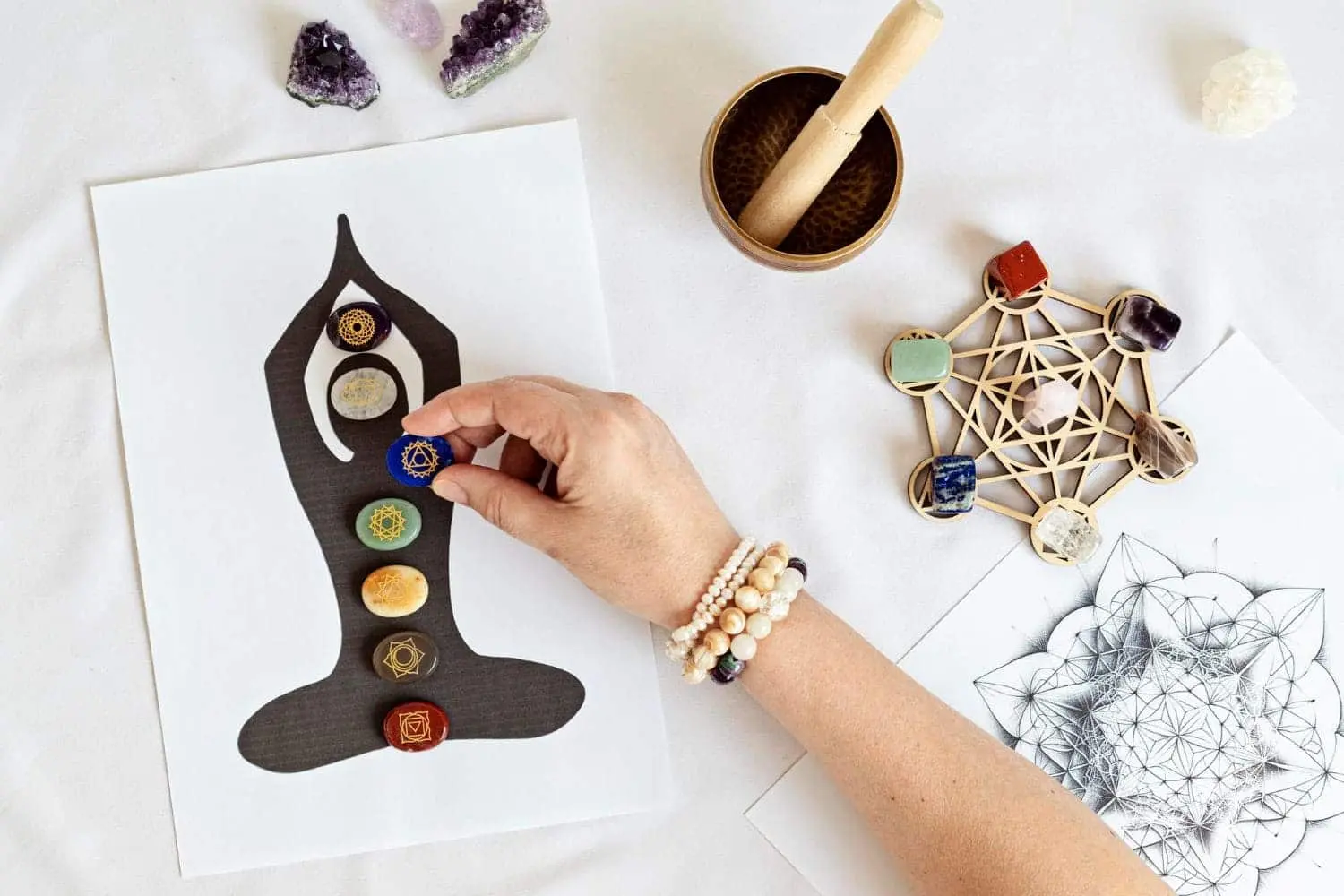
Ancient wisdom pairs chakra colors and symbols to amplify energy work. Each chakra connects with geometric patterns called yantras or mandalas that visually represent its function and frequency.
Root chakra symbols feature squares with four petals, symbolizing stability. The sacral chakra shows crescent moons with six petals, representing flow. As you move upward, symbols increase in complexity, with the crown chakra displaying thousand-petaled lotuses representing infinite consciousness.
During chakra balancing meditation, visualizing both color and symbol for each center creates powerful experiences. These symbols communicate directly with your subconscious, bypassing mental resistance and facilitating deeper energetic shifts.
Heart chakra meditation involves visualizing both emerald green light and its symbol – a six-pointed star inside a twelve-petaled lotus. This combined imagery activates specific frequencies needed for heart healing more effectively than color alone.
Applying Chakra Colors for Energy Balancing: Practical Techniques
Identifying Your Needs (Finding Your Dominant Energy)
Before beginning chakra balancing work, assess which energy centers need attention. Which aspects of life feel challenging right now? Where do you feel blocked or depleted? These questions help identify chakras needing support.
Physical symptoms provide clues: persistent throat issues might indicate throat chakra imbalance, while digestive problems could suggest solar plexus challenges. Emotional patterns also reveal chakra color needs – persistent fear suggests root chakra work, while communication difficulties point to throat chakra attention.
Signs your chakras might need balancing include:
- Recurring physical discomfort in specific body areas
- Emotional reactions that feel disproportionate or overwhelming
- Difficulty expressing certain qualities (confidence, creativity, love)
- Feeling stuck in repetitive patterns despite your efforts to change
- Sleep disturbances or energy fluctuations throughout the day
- Challenges in specific life areas (relationships, work, self-expression)
To discover “what is my chakra color” (your current dominant energy), notice which qualities come easily and which feel challenging. Are you naturally confident but struggle with compassion? Your solar plexus may dominate while your heart needs balancing. Do you communicate effectively but lack groundedness? Your throat chakra may show strength while your root needs support.
Understanding dominant versus deficient energy helps target practice. Overactive chakras need calming, while underactive ones need stimulation – both require different approaches to chakra colors.
Meditative & Visualization Techniques
Chakra balancing meditation provides direct access to these energies. Start with a simple practice: sit comfortably, breathe deeply, and focus on each chakra from root to crown. Visualize each center glowing with its corresponding color, brightening with each breath.
For targeted work, use physical objects matching chakra hues as focal points. A red stone placed nearby while meditating enhances root chakra connection, while gazing at blue objects strengthens throat chakra energy.
Color breathing amplifies these effects. Imagine inhaling the healing chakra colors you need and exhaling blockages. Breathe in a vibrant green light to heal the heart, visualizing it dissolving emotional wounds as you exhale.
Environmental & Personal Color Integration
Surrounding yourself with specific chakra colors creates subtle but continuous energy support. For offices, introduce yellow touches to enhance clarity and confidence if your solar plexus needs strengthening. For bedrooms, soft greens or blues promote heart and throat harmony.
Clothing choices offer another practical application. Red socks or undergarments can support root stability during stress without being obvious. Orange accessories brighten creative energy, while purple accents enhance spiritual awareness.
Even food choices reflect chakra color awareness. Red foods like apples and berries nourish root energy, while blue foods like blueberries support throat expression. This approach connects physical nourishment with energetic sustenance.
The top ways to incorporate chakra colors into your daily life include:
- Morning visualization with each color while showering
- Selecting clothing with intention based on needed energies
- Placing colored objects at your desk or meditation space
- Eating foods matching the colors of chakras needing support
- Setting phone or computer backgrounds to specific healing hues
Specific Chakra Color Therapy Modalities

Color therapy utilizes light frequencies to directly influence your energy field. Simple applications include colored light bulbs in lamps for specific effects – red for energy, blue for calm, violet for meditation spaces.
Colored glass or filters transform ordinary sunlight into powerful healing tools. Sitting in filtered light for even ten minutes can shift your energetic state. This technique works because your skin absorbs light frequencies, not just your eyes.
Some practitioners use focused applications, directing colored light toward specific body areas. This targeted approach helps address particular physical or emotional issues related to chakra balancing.
Common signs that you might benefit from color therapy include:
- Persistent feelings of depletion or fatigue
- Emotional reactivity that seems disproportionate
- Recurring physical discomfort in specific body regions
- Difficulty expressing certain qualities (confidence, creativity, compassion)
- Feeling “stuck” despite other personal growth efforts
Embodied & Integrated Practices
Movement uniquely activates chakra colors within your energy field. Specific yoga poses correspond to different chakras – standing poses ground root energy, while heart-opening backbends activate the heart chakra. Adding color visualization to these movements amplifies their effects.
Crystals and stones provide tangible tools for chakra color work. Red jasper supports root stability, while blue lapis lazuli resonates with throat energy. Holding these stones during meditation or carrying them throughout your day offers continuous, subtle support.
Sound combined with color creates multi-sensory chakra balancing. Specific tones resonate with different energy centers – low notes for lower chakras, higher notes for upper chakras. Chanting while visualizing chakra colors creates powerful harmonic effects within your energy field.
The most powerful combinations for chakra balancing include:
- Root: Red visualization + grounding pose + carnelian stone
- Heart: Green light + deep breathing + rose quartz crystal
- Crown: Violet imagery + silence + clear quartz or amethyst
- Throat: Blue visualization + humming practice + sodalite stone
- Solar Plexus: Yellow light + core strengthening + citrine crystal
For deeper immersion, spiritual retreats provide environments where multiple healing chakra colors approaches combine for transformative experiences. These settings offer expert guidance and community support, accelerating your understanding of chakra color work.
Unlock Your Vibrant Balanced Life
Working with chakra colors provides an accessible path to greater balance and well-being. These vibrant energies exist within you already, waiting for harmonization through conscious attention. Start with simple awareness of how colors affect you, then gradually incorporate techniques that resonate with your unique needs.
Remember that chakra balancing happens gradually, with subtle shifts accumulating into significant change. Trust your intuition about which color of chakra needs attention first – your inner wisdom knows exactly what you need. The rainbow of energies within you holds the key to a more vibrant, balanced life.